





Filmmakers, Screenwriters, Performance, Reviews, Film Reviews, Streaming

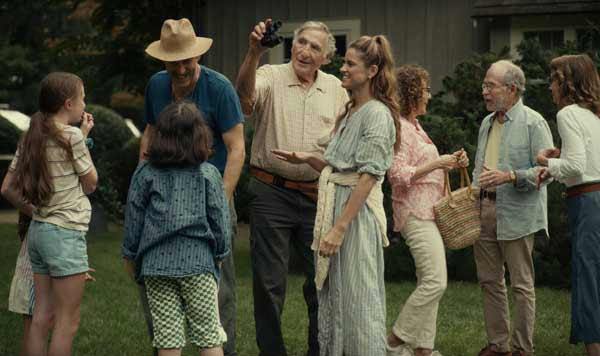
Photo Courtesy of Greenwich Entertainment
FANTASY LIFE
by Justin Tanner
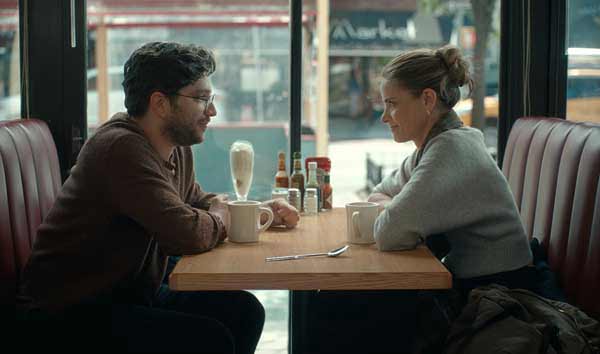
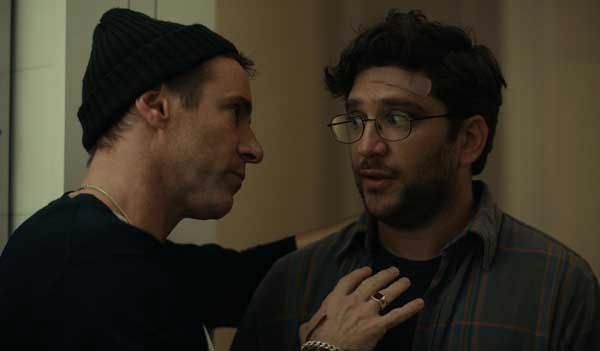
A sweet romantic comedy about clinical depression may sound like an unworkable idea, but writer-director Matthew Shear somehow pulls it off. “Fantasy Life,” his remarkably assured debut feature, is an unlikely love story between a fifty-one-year-old mother of three and the thirty-five-year-old babysitter she hires to help care for her children. The mother, Dianne (Amanda Peet, in peak form), is a semi-retired actress quietly attempting a comeback. Sam (played with wry, melancholy charm by the director) is an unemployed paralegal who drifts into childcare mostly to pay the rent. Both are struggling with depression, though Dianne’s is more acute, requiring a pharmacy’s worth of medication to keep her demons at bay, while Sam’s manifests primarily through recurring panic attacks and emotional paralysis. Recognizing in each other an equally damaged but quietly valiant survivor — albeit at very different stages of life — the two gradually form a gentle bond that helps carry them through an unusually difficult year. But there are complications, not the least of which is Dianne’s husband David (Alessandro Nivola), an emotionally stunted musician drifting through middle age in a state of passive bewilderment. Though technically still married, the couple hasn’t had sex in years, and when David leaves for a summer tour of Australia, Dianne begins turning to Sam for the connection she’s been missing. Part of the attraction, as Dianne herself admits, is that Sam is simply “easy to be around.” He seems almost entirely without demands: quiet, agreeable, eager to please, and calm in a way that sharply contrasts with the chaotic energy of her three daughters and her overgrown-man-child husband, whose boundary issues manifest in bouts of day drinking and sudden crude grabs accompanied by a whispered “wanna fuck?” As Sam gradually becomes what he repeatedly insists is not a “manny,” Shear maps the shifting dynamic between employer and employee with microscopic precision and sensitivity, illuminating the strange vulnerability built into domestic labor. Ironically, the children themselves are the least convincing aspect of the film. Shear never fully differentiates the three girls, and the youngest in particular is written with a level of shrillness that occasionally nudges the movie toward sitcom territory. Thankfully, the girls eventually recede to the margins, allowing the entanglement between the three adults to emerge as the film’s true subject. Shear has also assembled an astonishing supporting cast — including Andrea Martin, Holland Taylor, Jessica Harper, Bob Balaban, and Zosia Mamet — all working at the same delicate frequency, where every performance feels both effortless and meticulously observed. And then there’s Judd Hirsch, whose name appearing in a movie’s opening credits usually affects me the way beet salad does on a prix fixe menu — my appetite immediately disappears. I grew up watching “Taxi,” and usually found Hirsch’s studied naturalism — working so hard to seem real that it curdled into mannerism — unbearably grating. “Ordinary People” proved he could rein the style in when necessary, but over the years his acting grew broader until finesse all but vanished. Then came “The Fabelmans,” where Spielberg — a director who rarely trusts audiences to meet him halfway — pushed Hirsch into such aggressively oversized territory that watching the performance felt less like acting than a medical event. Naturally, he was Oscar nominated. But Judd? All is forgiven. In “Fantasy Life,” Hirsch gives possibly the finest performance of his career: subtle, funny, confident, and full of tiny jewel-like reactions that reveal entire histories of thought and feeling. Playing a psychiatrist — again — he brings such an effortless quality of simply “being” that it becomes almost impossible to look away.
Shear structures the film as a series of brief, carefully shaped encounters that rarely unfold the way you expect them to. Scenes often build toward a climax, only to cut away moments before the release arrives, which keeps the film slightly out of reach, creating a quiet propulsion that makes it feel dramatically shorter than it is. Yet at other times, he allows scenes to continue longer than most filmmakers would dare, lingering not on dramatic revelations but on the private aftermath that follows. There’s a remarkable scene in which Dianne meets her agent for coffee to discuss the possibility of returning to acting after years away from the business. The agent, sensing Dianne’s desperation, begins offering the expected reassurance — right up until a phone call interrupts the conversation mid-thought and pulls her away from the table. Suddenly Dianne is left alone with the silence, and we watch as all the fragile hope drains back out of her face. The moment lasts maybe fifteen seconds, but it feels enormous. Sitting alone in the middle of a crowded diner, Dianne slowly collapses inward, becoming intensely private in the middle of a public space. It’s a devastating piece of acting. My only real reservation involves Shear’s own performance as Sam. The character is intentionally passive, almost blank at times — a man so anxious and self-protective that most of his major realizations seem to occur somewhere offscreen. Even his growing feelings for Dianne remain so tightly sealed away that when he finally blurts out his love during a panic attack — which we don’t actually see — the revelation feels less like an emotional eruption than the accidental release of pressure that’s been building invisibly beneath the film’s surface.
This restraint is partly what allows “Fantasy Life” to function as an ensemble piece — Sam’s stillness creates space for the extraordinary supporting cast surrounding him. But I occasionally found myself wishing Shear had allowed the character a single moment of genuine volatility so we could fully glimpse the darker or more desperate parts of his inner life. Still, Shear remains enormously appealing onscreen, radiating the slightly melancholy warmth of a children’s-book bear who somehow wandered into an adult relationship drama. And his accomplishment as writer and director is remarkable. The film possesses the kind of quiet attentiveness and patient observational grace more commonly associated with filmmakers like Ozu than contemporary American indie cinema. When I think about what defines a great director, I don’t immediately think of camera placement or technical virtuosity. I think about performance, because that’s where movies stop being mechanical and start becoming human. And when every actor in a film appears to be working at the same precise emotional frequency, I look to the person guiding them. In that regard, Matthew Shear already seems like a major director in the making. AVAILABLE TO RENT ON FANDANGO AT HOME |
|
An LA-based playwright, JUSTIN TANNER has more than twenty produced plays to his credit, including Voice Lessons, Day Drinkers, Space Therapy, Wife Swappers, and Pot Mom, which received the PEN-West Award for Best Play. He has written for the TV shows Gilmore Girls, My So-Called Life and the short-lived Love Monkey. He wrote, directed and edited 88 episodes of the web series Ave 43, available on YouTube. Tanner is the current Playwright in Residence for the Rogue Machine Theatre in Hollywood, where his most recent play My Son the Playwright, of January of 2026, was met with rave reviews. Travis Michael Holder of the LA Drama Critics Circle wrote, "a phenomenal new achievement by local counter-culture hero Justin Tanner.”
|


To receive a free subscription to our Sunday Lounge! newsletter, Click Here
Have a suggestion? Send an email to the Editor, Click Here