





Filmmakers, Screenwriters, Performance, Reviews, Film Reviews, Streaming

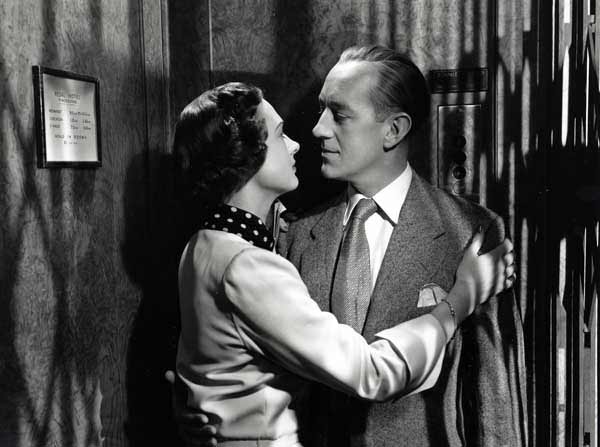
Photo Courtesy of Warner Brothers
LAST HOLIDAY (1950)
by Justin Tanner
I've been spending a lot of time lately on the cinema website “They Shoot Pictures, Don't They?,” which aggregates thousands of Top 100 lists submitted by critics, filmmakers, and cinephiles into a massive ranking of more than twenty thousand films, sortable by year, director, country, length and reputation. It's a dangerous place for anyone with even a mild tendency toward cinematic obsession. The usual suspects occupy the top spots: "Citizen Kane," "Vertigo," "2001: A Space Odyssey," "Tokyo Story," and "The Rules of the Game." But the real pleasure of the site lies in its malleability. You can wander down any rabbit hole you like. One afternoon I compiled a list of the greatest British films under ninety minutes and started working my way through it. That's how I discovered hidden gems like "Night Train to Munich," "The Rocking Horse Winner," "Hell Is a City," and "Turn the Key Softly." And eventually, "Last Holiday."
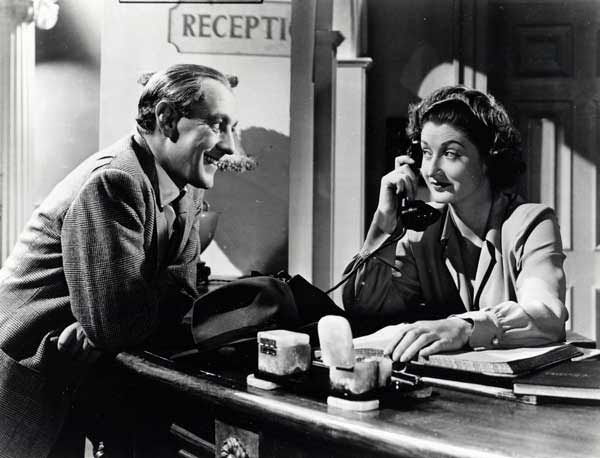
The timing could not have been better. At moments like these, when every day seems to bring another worst-case scenario made real, hope can start to feel like a luxury item. Every time you open your laptop, the news lands like a dumbbell to the face. Which is why, now more than ever, it's necessary to seek out art that does something unfashionable: make you feel better. The 89-minute British classic "Last Holiday," from 1950 and starring a transcendent Alec Guinness, is one of those rare films. Guinness, at his most endearing, plays George Bird, a gentle, self-effacing man in his thirties whose life has passed almost unnoticed, by others and, increasingly, by himself. Unmarried, friendless, and trapped in a routine of quiet disappointments, George learns that he has less than a month to live and resolves to spend his remaining days doing what he's never really done before: living. He withdraws his meager savings, cashes in his life insurance policy, and checks into a luxurious seaside hotel, where he falls in with a community of eccentrics played with enormous charm by some of England's finest character actors, including Ernest Thesiger, Wilfrid Hyde-White, Kay Walsh, Bernard Lee, and Beatrice Campbell. For perhaps the first time in his life, George finds friendship, romance, and a reason to look forward to tomorrow. The tragedy is that he won't be around long enough to enjoy any of it. Director Henry Cass brings a surprising depth to the film's generally light-hearted tone without ever crossing the line into sentimentality. The cast play J. B. Priestley's beautifully observed characters with enough charm and spice to bring out the script's quietly ironic flavor. It's the sort of thing the British do effortlessly: a comedy that never forgets life's sadness, and a melancholy story that never loses its sense of humor. Of course, when Hollywood got its hands on the property, the result was exactly what you'd expect.
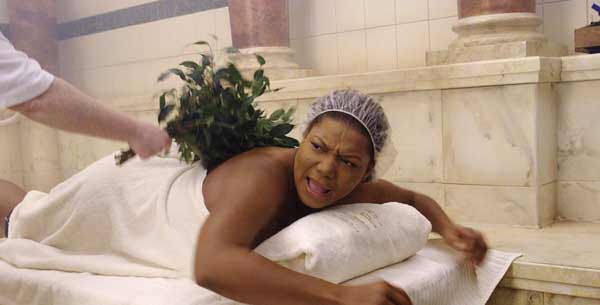
Queen Latifah inherited the role in the 2005 remake (renamed Georgia Byrd), but screenwriters Jeffrey Price and Peter S. Seaman took Priestley's elegant premise and buried it beneath an avalanche of plot. What was once a gentle comedy about mortality, regret, and second chances became a wildly overstuffed farce featuring a corporate supervillain, an increasingly implausible romance with L.L. Cool J, base jumping, suicidal ideation, enough coincidences to fuel a Hallmark marathon, and cameos by both Emeril Lagasse and Little Richard. The original runs a brisk 89 minutes. The remake, at 112, feels longer than George Bird's terminal diagnosis. I'm not here to dunk on the remake, though I suppose I just did, but rather to point out what Hollywood often misunderstands about storytelling. For decades, screenwriters have been taught to equate drama with conflict. Every desire must meet resistance. Every choice must trigger opposition. Every scene must raise the stakes. The result is a kind of narrative arms race in which subtlety is flattened and human behavior is forced into increasingly artificial confrontations. The original "Last Holiday" succeeds because it understands something many modern films have forgotten: watching decent people treat one another decently can be every bit as compelling as watching them try to destroy each other. Perhaps that's why the film feels so refreshing today. In an age of cynicism, outrage, and endless manufactured conflict, George Bird's small journey toward courage and connection feels almost radical. It's a movie built on kindness. And at the moment, kindness feels like one of the most underrated special effects in cinema. STREAMING ON THE CRITERION CHANNEL |
|
An LA-based playwright, JUSTIN TANNER has more than twenty produced plays to his credit, including Voice Lessons, Day Drinkers, Space Therapy, Wife Swappers, and Pot Mom, which received the PEN-West Award for Best Play. He has written for the TV shows Gilmore Girls, My So-Called Life and the short-lived Love Monkey. He wrote, directed and edited 88 episodes of the web series Ave 43, available on YouTube. Tanner is the current Playwright in Residence for the Rogue Machine Theatre in Hollywood, where his most recent play My Son the Playwright, of January of 2026, was met with rave reviews. Travis Michael Holder of the LA Drama Critics Circle wrote, "a phenomenal new achievement by local counter-culture hero Justin Tanner.”
|


To receive a free subscription to our Sunday Lounge! newsletter, Click Here
Have a suggestion? Send an email to the Editor, Click Here