





Filmmakers, Screenwriters, Performance, Reviews, Film Reviews, Streaming

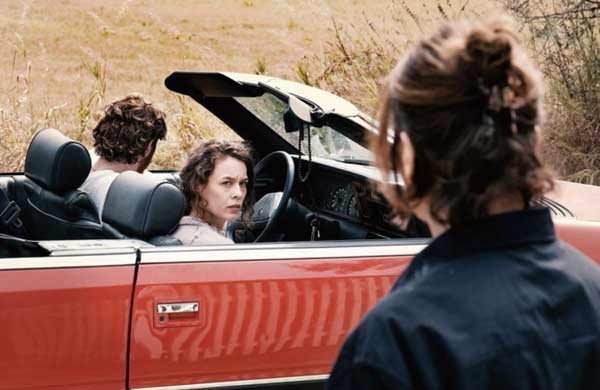
Photo Courtesy of 3-1-2 Special
MIROIR NO. 3
by Justin Tanner
There are few safer bets in cinema than a new Christian Petzold film. Eleven features in, he still hasn’t made a single dud. Even the one I admire least, his theatrical debut, “The State I Am In,” from 2000, is a very good movie. And his best works, especially 2014’s devastating “Phoenix,” rank among the finest films of this century. Petzold often begins quietly, already mid-stride, with an almost imperceptible undercurrent of menace, like a slow-burn thriller whose central mystery gradually reshapes everything around it. He baits his films so beautifully we often don’t realize the twist until we’ve already swallowed the hook — until a revelation suddenly forces us to reinterpret what we thought we were watching. Sometimes the pivot is explicit, sometimes almost undetectably subtle, but the effect is the same: the film deepens beneath our feet. The plots are usually built around a simple but powerful idea: a man kills a child in a hit-and-run and secretly pursues a relationship with the victim’s mother (“Wolfsburg”). A Holocaust survivor reconstructs herself and attempts to woo her husband without revealing who she really is (“Phoenix”). A refugee assumes another man’s identity while trapped in bureaucratic limbo (“Transit”). Petzold’s characters behave less like stable individuals than displaced souls inhabiting temporary versions of themselves. In his cinema, identity is rarely fixed; it’s negotiated moment to moment through performance, secrecy, projection, and survival.
Though Petzold has made only one unofficial remake, the haunting “Yella,” loosely adapted from “Carnival of Souls,” his work constantly draws from the film canon, operating within what he describes as a “cemetery of genre cinema.” “Jerichow” relocates “The Postman Always Rings Twice” to post-reunification Germany. “Transit” plays like “Casablanca” rewritten by Franz Kafka. And “Phoenix” brilliantly inverts “Vertigo,” transforming a story about a man reshaping a woman into one about a woman reconstructing herself. But Petzold’s films don’t merely converse with cinema history; they converse with one another. Familiar motifs resurface — thwarted love, doubled identities, psychological mirroring, survivors drifting through the aftermath of catastrophe. Car crashes recur so frequently they begin to feel less like plot devices than foundational Petzold imagery. Yet none of it feels repetitive. Like Tennessee Williams endlessly reworking the collision between romantic illusion and brutal reality, Petzold continually discovers fresh variations on his central obsession: guarded, isolated characters — often women — suspended in transit, occupying liminal spaces between identities, relationships, and worlds. And he does it with one of the great repertory ensembles in modern cinema. The repeated appearance of actors like Nina Hoss, Paula Beer, Matthias Brandt, Barbara Auer, Enno Trebs, and Franz Rogowski creates the uncanny sensation that all of Petzold’s films occupy adjacent corners of the same haunted landscape. With “Miroirs No. 3,” his latest — and perhaps most hopeful — film, Petzold pares his storytelling down to something seemingly modest — the bond that develops between two women after a devastating car accident — only to reveal an emotional abyss beneath it that gives the film’s quiet tenderness the weight of genuine loss. The title comes from Maurice Ravel’s piano suite “Miroirs,” specifically its third movement, “Une barque sur l’océan” (“A Boat on the Ocean”), a drifting, mercurial composition built around undulant motion that feels designed for Petzold’s cinema, whose characters often resemble small vessels drifting across unstable currents. There are familiar elements: a car crash (of course), a woman caught in limbo, characters struggling to connect, a mystery slowly surfacing beneath calm waters, and four of Petzold’s regulars — Beer, Brandt, Auer, and Trebs — inhabiting a deceptively simple drama of grief and longing. But there’s also something new being presented, perhaps best captured by the director himself:
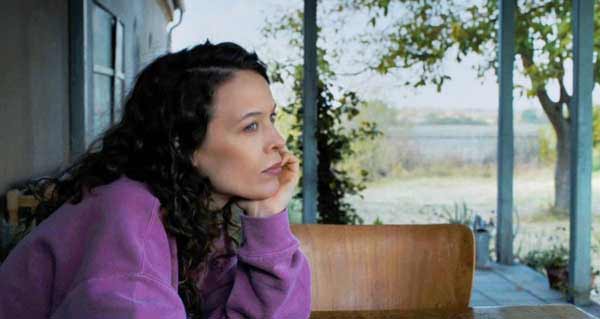
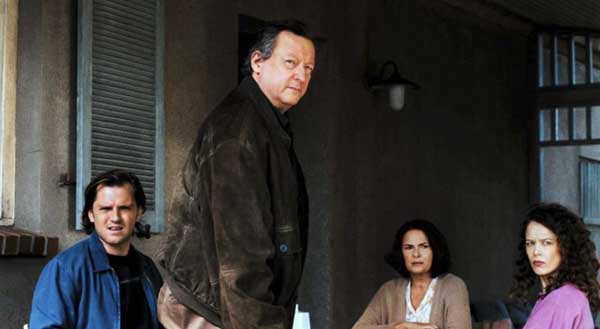
Throughout the film, broken things are quietly fixed: a dishwasher, a bicycle, a damaged car, a fence. Even the family at the center of the story slowly reconstitutes itself through the presence of a stranger. And that stranger — another warm-hearted, enigmatic Petzold heroine played by Paula Beer — gradually repairs herself as well, discovering a self-possession absent from the film’s opening moments. The ending, for all its quiet grace, didn’t initially land quite where I expected — or perhaps hoped. Only later did the director’s intentions come into focus. The “Miroirs No. 3” of the title does finally appear on the soundtrack — pianists being another familiar Petzold motif — as we’re shown a series of calm, lucid moments of familial reconnection, of lives tentatively reorganizing themselves around the possibility of rebirth. The simple act of whisking eggs in a bowl or opening the door to an empty apartment and discovering wind-blown curtains becomes a fragile snapshot of redemption. In the end, the sequence feels like a summation of Petzold’s entire body of work: damaged people suspended between catastrophe and connection, searching for — and perhaps briefly finding — temporary solace. AVAILABLE TO RENT ON AMAZON PRIME VIDEO |
|
An LA-based playwright, JUSTIN TANNER has more than twenty produced plays to his credit, including Voice Lessons, Day Drinkers, Space Therapy, Wife Swappers, and Pot Mom, which received the PEN-West Award for Best Play. He has written for the TV shows Gilmore Girls, My So-Called Life and the short-lived Love Monkey. He wrote, directed and edited 88 episodes of the web series Ave 43, available on YouTube. Tanner is the current Playwright in Residence for the Rogue Machine Theatre in Hollywood, where his most recent play My Son the Playwright, of January of 2026, was met with rave reviews. Travis Michael Holder of the LA Drama Critics Circle wrote, "a phenomenal new achievement by local counter-culture hero Justin Tanner.”
|


To receive a free subscription to our Sunday Lounge! newsletter, Click Here
Have a suggestion? Send an email to the Editor, Click Here