





Filmmakers, Screenwriters, Performance, Reviews, Film Reviews, Streaming

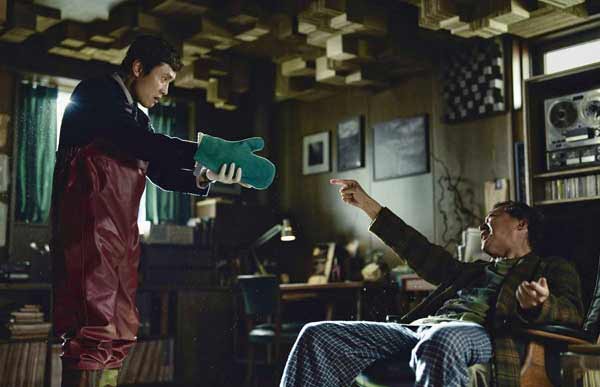
Photo Courtesy of Neon
NO OTHER CHOICE
by Justin Tanner
Donald Westlake’s satirical noir novel “The Ax” — about an unemployed middle-aged businessman who decides to eliminate his professional rivals one by one — makes an outrageous idea terrifyingly plausible by grounding every step in recognizable fear and desperation. Westlake’s humor is dark, precise, and rooted in a reality that never once winks at the reader. The novel is undeniably funny, but in a twisted, discomfiting way that implicates us as much as it entertains. Director Costa-Gavras understood this instinctively when he adapted “The Ax” for the screen in 2005, channeling the cool precision of Claude Chabrol to create a disturbing social satire about the cutthroat world of a shrinking job market. The film elicits genuine laughs precisely because everything is played straight. “No Other Choice,” by contrast, Park Chan-wook’s recent adaptation of the same material, seems determined to signal the joke from the very first frame — and in doing so abandons the fragile tonal balance that makes Westlake’s story so unnerving in the first place. With a saturated color scheme that gives the film the look of a gaudy fairy tale, Chan-wook dials everything up to eleven, transforming Westlake’s clear-eyed vision of identity under capitalism — where a person’s worth is defined by their work — into a confusing stew of slapstick and baroque hyper-violence. Directors don’t need to be faithful to their source material. Stanley Kubrick famously threw Stephen King’s novel out the window when adapting “The Shining,” yet still produced what many consider a masterpiece.
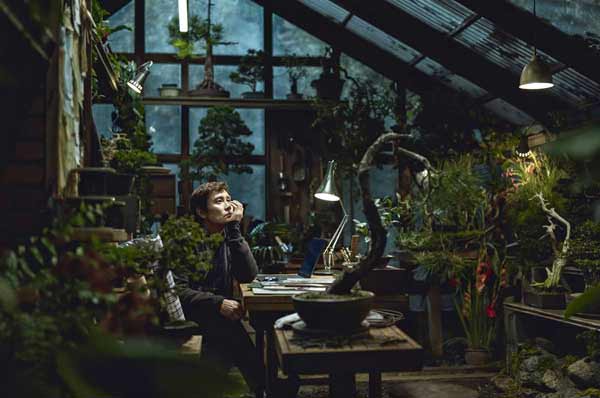
Chan-wook clearly follows a blueprint of his own — sculpting Westlake’s story into something unmistakably personal. The problem is that in doing so, he trades plausibility for caustic sensation. In the novel, right from the first sentence, the narration subtly implicates us in the crimes even as we recoil from them: “I’ve never actually killed anybody before, murdered another person, snuffed out another human being.” That uneasy complicity becomes the novel’s greatest source of tension. Costa-Gavras wisely preserves this interior access by beginning his film two murders in, with his protagonist, Bruno (a smoldering José Garcia) confessing into a tape recorder before bringing us up to speed through a series of flashbacks. In “No Other Choice,” Chan-wook forgoes voice-over, which would be fine if actor Lee Byung-hun could modulate his performance enough for us to track his descent into the unthinkable. Instead, his character is presented as unstable from the first frame. Even while grilling eel for his family in the backyard, he appears poised for mayhem, telegraphing madness long before the story has earned it. Grotesquery has long been part of Chan-wook’s bag of tricks — his brilliant “Oldboy,” for instance, includes a notorious scene of amateur dentistry performed with a claw hammer — but here he lets those indulgences drive the film straight off a cliff. The first murder — which takes more than an hour to arrive — is played strictly for laughs and involves more wacky antics than a Looney Tunes climax. Unfolding to the strains of Cho Yong-pil’s “Red Dragonfly” played at an ear-shattering volume, the scene escalates into a five-minute cacophony of shouting and gun-grabbing that feels far longer than it should. At this point, the film abruptly shifts gears and things briefly begin to resemble the kind of darkly comic thriller Westlake had in mind. But the aftertaste of all that ham-fisted farce never quite fades. Still, the technical craftsmanship is impeccable. As in all of Chan-wook’s films, the cinematography (by Kim Woo-hyung) is striking, the editing (by Kim Sang-bum and Kim Ho-bin) razor-sharp, and the production design (by Ryu Seong-hie) richly imaginative — if occasionally over-baked. And there is at least one terrific performance: Son Ye-jin, as the killer’s wife, digs deeper than anyone else in the cast, anchoring this fantastical barrage of sensory overkill with a welcome, low-key honesty. Then, in the film’s final moments, Chan-wook finally delivers the irony and satire that have been sorely missing for the previous 130 minutes — an O. Henry–style finish that almost redeems the cinematic jumble sale he’s been staging all along. Imagination isn’t Chan-wook’s problem. Discipline is. Westlake’s novel provides an impeccable schematic that needs no filigree to express its central warning about the dangers of systemic corporate abandonment. Costa-Gavras understood this, resisting ersatz thrills in favor of intimate moments — most memorably, a quiet scene that captures the dark comedy at the heart of the story: While the family eats dinner with the television humming in the background, the news reports on the double murder the father has just committed. Plates are passed, small talk exchanged. Then he makes a casual remark that subtly implicates himself — the mother catches it, but he quickly pivots, turning the comment into a joke — a textbook flash of gallows humor — and she smiles, letting it pass. It’s the kind of sequence that reveals character through ordinary behavior — tension built not through spectacle, but restraint. Chan-wook rarely trusts such moments, loading his film with racket and motion where silence might have carried more weight. In the end, what Westlake built with precision, and Costa-Gavras honored with moderation, Chan-wook overwhelms with excess — proving that style, without self-control, becomes nothing but noise. STREAMING ON HULU |
|
An LA-based playwright, JUSTIN TANNER has more than twenty produced plays to his credit, including Voice Lessons, Day Drinkers, Space Therapy, Wife Swappers, and Pot Mom, which received the PEN-West Award for Best Play. He has written for the TV shows Gilmore Girls, My So-Called Life and the short-lived Love Monkey. He wrote, directed and edited 88 episodes of the web series Ave 43, available on YouTube. Tanner is the current Playwright in Residence for the Rogue Machine Theatre in Hollywood, where his most recent play My Son the Playwright, of January of 2026, was met with rave reviews. Travis Michael Holder of the LA Drama Critics Circle wrote, "a phenomenal new achievement by local counter-culture hero Justin Tanner.”
|

To receive a free subscription to our Sunday Lounge! newsletter, Click Here
Have a suggestion? Send an email to the Editor, Click Here