





Filmmakers, Screenwriters, Performance, Reviews, Film Reviews, Streaming


Photo Courtesy of Dark Star Pictures
$POSITIONS
by Justin Tanner
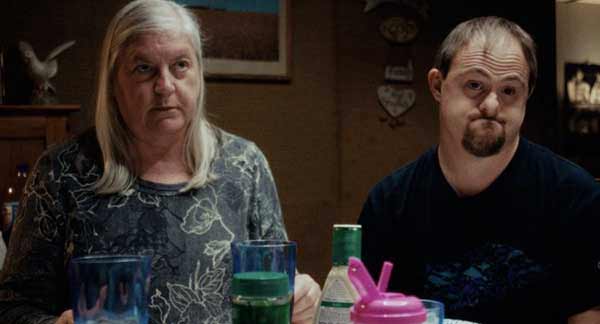
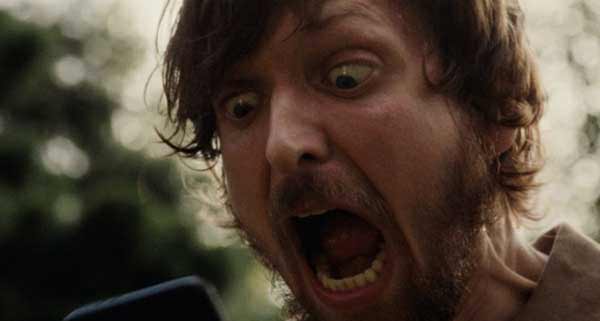
We’ve spent the last fifteen years training our nervous systems for movies like “$POSITIONS.” Ever since smartphones fused themselves to our hands and social media platforms began refreshing like slot machines, modern life has become a nonstop cycle of anticipation, panic, stimulation, and release. Anxiety itself has become a form of entertainment. “$POSITIONS” belongs to a particular strain of adrenalized cinema engineered to weaponize that sensation. Films like “Run Lola Run,” “Good Time,” “Uncut Gems,” and Eric Gravel’s “Full Time” all operate on the same principle: tighten the tension, release it briefly, then crank it back up again before the audience has time to breathe. What horror films usually save for the final twenty minutes, these movies sustain for nearly their entire runtime. Writer/director Brandon Daley’s feature debut follows Mike (Michael Kunicki), a financially struggling man in his 20s caring for his younger brother Vinny (Vinny Cress), who has Down syndrome, while simultaneously pouring his emotional life into cryptocurrency speculation. The opening shot establishes the film’s thesis: fluctuating crypto numbers reflected directly in Mike’s pupils as he drives Vinny to his care facility, half-watching the road while attempting to explain the logic of digital currency to his brother using a string of incomprehensible crypto jargon: “I bought this NFT exchange and it uses AMM pools. You can use your NFTs to provide liquidity now.” Mike barely seems to grasp it himself, with crypto functioning less as an investment strategy than a form of magical thinking — the fantasy that one lucky bounce could permanently alter the trajectory of an otherwise disappointing life. Then, at work, in the middle of a lecture from his boss about his level of commitment, Mike’s phone suddenly chimes. A quick glance at the screen reveals his crypto holdings have surged to nearly thirty thousand dollars. To any functioning adult, this amount might register as temporary relief. To Mike, it looks like total liberation. He immediately quits his job and starts carrying himself like a man who has permanently escaped his social class, believing that a brief spike in value has somehow rewritten the laws governing his life.
Of course it doesn’t last — how could it? In a market this volatile, collapse feels practically baked into the system. And as Mike’s fortunes fluctuate in real time, so does his sense of self, each loss pushing him toward riskier and more desperate behavior until his entire life becomes leveraged against the possibility of one miraculous rebound. Director Daley pulls remarkably few punches as he subjects Mike to a cascading series of catastrophes that are by turns horrifying, hilarious, and almost unbearably stressful to watch, occasionally pushing the humiliation and bodily horror right to the edge. One extended party sequence, in which Mike — attempting to loosen up by having his first drink — gets handed a beer bong filled with urine, becomes so prolonged and revolting I briefly feared the movie might lose me entirely. It’s set up as the inevitable “holy shit, did you see that?” moment modern anxiety-comedies increasingly seem obligated to provide. And while I understand the impulse, the film is strong enough that it hardly needs such gimmicks to remain memorable. Still, Daley earns most of the film’s excesses honestly enough that — urine bong notwithstanding — very little ultimately feels gratuitous. Like the Safdie brothers — the film’s clearest stylistic ancestors — Daley understands that relentless momentum only works if the consequences feel genuinely dangerous. For all the manic humor and slapstick escalation, “$POSITIONS” never allows the audience to forget that Mike is gambling with real human stakes. Once his heroin-addicted cousin Travis (the funny and frightening Trevor Dawkins) gets pulled into the chaos, the film’s deeper subject — generational addiction in small-town America — begins to emerge more clearly. What initially plays like a frantic comedy gradually mutates into something far darker. At the center of it all is Michael Kunicki’s Mike, hurtling through the film with a mix of manic confidence and emotional fragility while remaining blissfully unaware that, to everyone else, he might as well have an L tattooed on his forehead. Explosively euphoric one moment and utterly shattered the next, he delivers a fully inhabited, almost psychotically committed performance. And Kunicki never allows the character to drift beyond empathy or understanding. We recognize the addiction beneath the behavior, along with the blind optimism fueling his increasingly catastrophic decisions. Like the relationship between the brothers in Josh and Benny Safdie’s “Good Time” — another anxiety spiral built around an unstable caretaker desperately trying to protect a more vulnerable sibling — it’s ultimately the brother with the disability who becomes the emotional anchor keeping the other alive.
Near the climax, as the clock literally ticks toward catastrophe, Mike desperately tries to extract a crucial piece of information from Vinny, whose speech takes time and patience to fully understand. The resulting miscommunication sends Mike spiraling in the wrong direction while we watch helplessly from the sidelines. Despite its modest scale, the film displays a level of formal confidence — in both Daley’s direction of actors and his restless camera movement — that makes it feel far larger than its means. Daley isn’t simply showing off. The film itself begins to mimic the addictive logic of the technology it’s criticizing — constant stimulation, constant anticipation, constant panic. In that sense, “$POSITIONS” isn’t really about cryptocurrency at all. It’s about the increasingly unstable psychological relationship we’ve developed with technology itself. Every buzz, every notification, every refresh carries the fantasy that this time the news might finally change our lives — even if all we’re really chasing is another temporary spike of hope flooding into the bloodstream. AVAILABLE TO RENT ON AMAZON PRIME |
|
An LA-based playwright, JUSTIN TANNER has more than twenty produced plays to his credit, including Voice Lessons, Day Drinkers, Space Therapy, Wife Swappers, and Pot Mom, which received the PEN-West Award for Best Play. He has written for the TV shows Gilmore Girls, My So-Called Life and the short-lived Love Monkey. He wrote, directed and edited 88 episodes of the web series Ave 43, available on YouTube. Tanner is the current Playwright in Residence for the Rogue Machine Theatre in Hollywood, where his most recent play My Son the Playwright, of January of 2026, was met with rave reviews. Travis Michael Holder of the LA Drama Critics Circle wrote, "a phenomenal new achievement by local counter-culture hero Justin Tanner.”
|

To receive a free subscription to our Sunday Lounge! newsletter, Click Here
Have a suggestion? Send an email to the Editor, Click Here