





Filmmakers, Screenwriters, Performance, Reviews, Film Reviews, Streaming


Photo Courtesy of MTV Doc Films
PREDATORS
by Justin Tanner
It is not one of my prouder admissions, but during the original run of "To Catch a Predator," I rarely missed an episode. What fascinated me wasn't the question of whether the men deserved punishment. Most appeared to have arrived intending to commit a terrible crime. The moral verdict seemed obvious. What interested me was everything happening around that verdict. Because the "victims" weren't actually children. They were adults posing as children. The encounters were carefully orchestrated. The cameras were already rolling. The arrests were timed for maximum dramatic effect. What was presented as investigative journalism was actually a form of public theater. And that ambiguity made the show strangely addictive. On one level, it was exposing predatory behavior. On another, it was packaging fear and humiliation as entertainment. No moment captured that contradiction better than Chris Hansen's habit of telling suspects they were "free to go." Relief would wash over their faces. They would head for the door believing they had escaped. Then came the shouted commands and the handcuffs waiting outside. The sequence was undeniably effective television. It was also difficult to separate from the guilty pleasure of seeing a trap spring shut. At what point does accountability become performance? When does punishment become spectacle? And how much of our outrage is driven by a desire for justice versus a desire to watch and smirk as someone is publicly destroyed? Those are the questions David Osit's documentary "Predators," about the ethical legacy of the hit NBC TV show, is brave enough to ask.
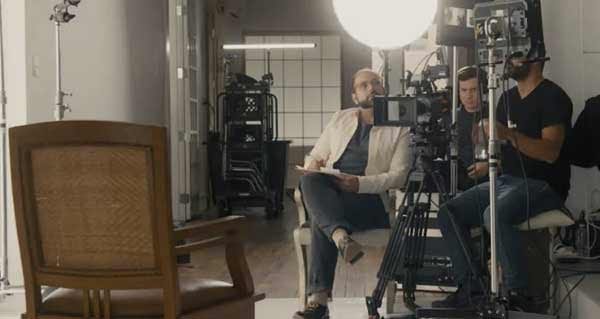
Broken into three sections, the film begins with the rise of "To Catch a Predator," then shifts to the army of imitators it inspired to go out and catch predators on their own, focusing in particular on YouTube vigilante Skeeter Jean, a Chris Hansen sound-alike whose low-rent operation relies on clickbait theatrics and a decoy who is visibly middle-aged. The final section turns to Hansen himself, as he launches a crime-focused streaming service, TruBlu, and yet another incarnation of his signature franchise, "Takedown with Chris Hansen." Intercut with archival footage, and appearances by several of the actors who played the child decoys, are a series of conversations with Mark De Rond, an ethnography professor at Cambridge University. De Rond functions as the film's conscience, watching episodes of the show and steering the discussion away from easy condemnation toward a more difficult question: what exactly are we looking at when we see someone else's life unravel in real time? After watching some raw, unaired footage in which a suspected predator apologizes to everyone in sight and pleads for the help he's never been able to find, De Rond observes: "To show these men as human beings, the show kind of breaks down. Yes, he's done and said awful things, but it shows some humanity that's hard to ignore. Maybe that's why it didn't make it on TV." It's a devastating insight. The moment the suspect becomes something more complicated than a villain, the format stops working. Which helps explain the film's deeply polarized reception. A glance through Rotten Tomatoes audience reviews reveals how divisive "Predators" has become. Many viewers seem to have wanted the film to reaffirm the moral certainty of "To Catch a Predator," not interrogate it, complaining that Osit is too sympathetic toward his subjects. Others are even more blunt. "I'd rather die than feel bad for any of these men," wrote one reviewer. Another dismissed anyone who admired the film as "a creep." The responses inadvertently reinforce Osit's point: the moment a predator is acknowledged as a human being, compassion itself begins to look suspicious. It makes for an invigorating, slightly dangerous watch. The incident ultimately helped bring down "To Catch a Predator," leading to a wrongful death lawsuit, a damaging court ruling against NBC, and the show's cancellation. It's not a feeling I enjoy.
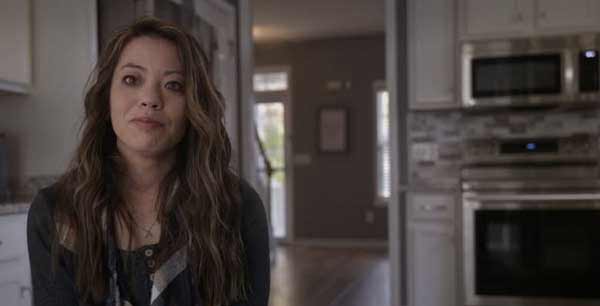
But that's what makes "Predators" so valuable. It refuses to let blanket moral certainty do all the thinking for us. The film's most damning example involves an eighteen-year-old named Hunter, whose life was upended after attempting to meet a fifteen-year-old boy in a sting operation conducted by Hansen's "Takedown" series. As Osit points out, that particular age gap would not even constitute a crime in much of the United States. Hansen aired the footage anyway. In a quietly devastating scene, Hunter's mother reflects on the fallout while her son's sobbing can be heard off camera. At eighteen years old, his life is effectively over before it has even begun. Later, during Osit's interview with Hansen, the filmmaker raises the case directly. Hansen acknowledges that airing the segment was a mistake, congratulates himself for eventually removing the footage, and then casually suggests that Hunter will be fine because things posted online eventually disappear. It's a remarkable statement, made all the more unsettling because Hansen doesn't seem to believe it himself. At the end of the interview, Osit points out: "This genre of TV you've helped create doesn't deter criminals or get to the bottom of their crimes, it just helps us enjoy it." "It's a valid point," Hansen replies before pivoting to the survivors of child sexual abuse, arguing that the show's popularity sends a message that someone is finally willing to stand up for them. Which is also a valid point. The documentary doesn’t pretend the positions are easily reconciled. And Osit himself acknowledges the comfort and validation these programs can provide: the reason he started watching “To Catch a Predator,” in the first place was because of his own experience as a victim of sexual abuse. Then, in a cheeky final flourish, Osit ends the interview by telling Hansen, "You're obviously free to go." Hansen gets the joke. As he leaves, hidden cameras continue tracking him through the building and out to his waiting limousine, transforming the hunter into the hunted. It's not the subtlest moment in the film. It is, however, a deeply satisfying one. STREAMING ON PARAMOUNT PLUS |
|
An LA-based playwright, JUSTIN TANNER has more than twenty produced plays to his credit, including Voice Lessons, Day Drinkers, Space Therapy, Wife Swappers, and Pot Mom, which received the PEN-West Award for Best Play. He has written for the TV shows Gilmore Girls, My So-Called Life and the short-lived Love Monkey. He wrote, directed and edited 88 episodes of the web series Ave 43, available on YouTube. Tanner is the current Playwright in Residence for the Rogue Machine Theatre in Hollywood, where his most recent play My Son the Playwright, of January of 2026, was met with rave reviews. Travis Michael Holder of the LA Drama Critics Circle wrote, "a phenomenal new achievement by local counter-culture hero Justin Tanner.”
|


To receive a free subscription to our Sunday Lounge! newsletter, Click Here
Have a suggestion? Send an email to the Editor, Click Here