





Filmmakers, Screenwriters, Performance, Reviews, Film Reviews, Streaming

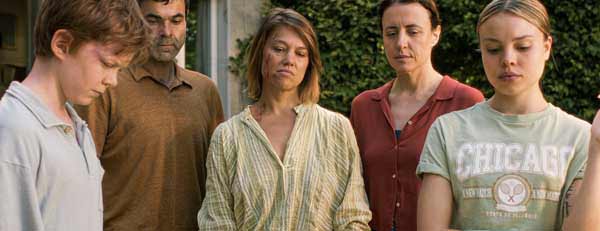
Photo Courtesy of Film Movement
THE SPARROW IN THE CHIMNEY
by Justin Tanner
There are certain films I hesitate to recommend, even when I admire them enormously. Sometimes the reason is obvious. Pasolini's "Salò" and Ken Russell's "The Devils" contain images so disturbing that watching them feels less like entertainment than endurance. I believe both are important works. I'm also not entirely convinced they're healthy experiences. Other films, like Apichatpong Weerasethakul’s hypnotic but opaque puzzle boxes like "Memoria" or "Uncle Boonmee Who Can Recall His Past Lives" can feel a little like recommending the Saturday New York Times crossword puzzle to someone looking for a beach read. And then there's Ramon Zürcher's "The Sparrow in the Chimney," which is neither inaccessible nor particularly violent, but poses its own unsettling challenge: how long can an audience remain trapped inside a family where every relationship has been poisoned?
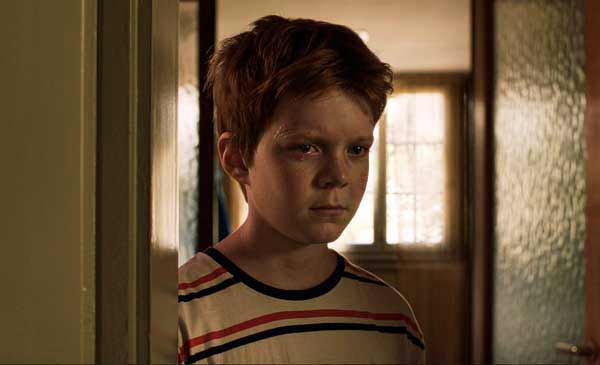
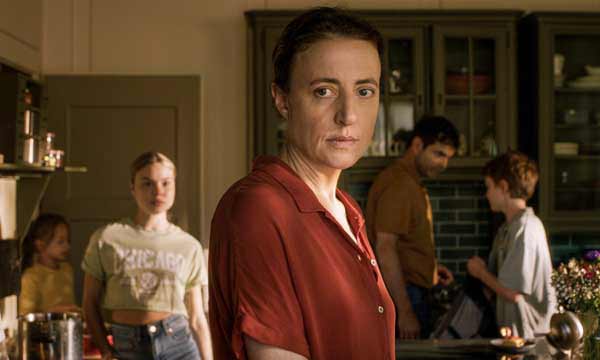
Zürcher's earlier films, "The Strange Little Cat" and "The Girl and the Spider" revolve around gatherings destabilized by damaged people. Yet both retain a warmth suggesting that connection remains possible despite the hurt. "The Sparrow in the Chimney" feels like the point where that hope finally runs out. Once again Zürcher gathers an extended family together, this time for a birthday celebration, and places a deeply troubled woman at the center of the proceedings. But the damage here is no longer confined to a single person. It has spread from parent to child and then outward again, accumulating over decades until every interaction feels contaminated by it; until there's no safe corner left in the room. Maren Eggert gives a quietly terrifying performance as Karen, the family matriarch, whom we first encounter lying rigid in bed while her ten-year-old son Leon (Ilja Bultmann) prepares a full meal in the kitchen. This mother/son relationship sits at the center of the film's radioactivity. With Karen and her husband Markus (Andreas Döhler) deeply estranged, Leon has been forced into the role of caretaker, provider, and companion. He cooks, cleans, shops, and appears to have organized much of the large gathering about to descend upon the family's farmhouse in rural Switzerland. Though he spends much of the film silently absorbing the gas leak of inappropriate emotions seeping from his mother, at some point the dam breaks and Leon commits a single horrifying act that sends a shockwave through the story. The dynamic brought back uncomfortable memories of my own childhood. As a pre-teen, I often became a repository for emotions I was too young to understand. Children in these situations don't know what to do with the feelings they're handed. The pressure builds. It leaks out sideways. Which is what makes Leon so heartbreaking. He isn't a monster. He's a casualty, and not the only one. Karen's daughter Johanna (Lea Zoë Voss), once a promising dancer, now suffers from a rare condition that gradually turns muscle into bone. The metaphor is almost too perfect. As the emotional life of the family calcifies around old grievances and unspoken injuries, Johanna's body is slowly doing the same. The mother/daughter interactions rank among the cruelest in the film. At one point Karen sneers at Johanna, "Don't think I'll spare you just because you're crippled." It's difficult to imagine a more concise summary of their relationship. The house itself is also crucial. Lovingly maintained and filled with antiques, heirlooms, and memories, it is obsessively curated by Karen, who nearly suffers a breakdown when her young niece places a gold-leaf porcelain plate in the microwave, delighting in the sparks and referring to them as "fireflies." But Karen is the only one still pretending the house is simply a house. The rest of the family understands, even if nobody says it aloud, that the place is has become a museum of unprocessed trauma, preserved not because it holds cherished memories, but because nobody has found the courage to tear it down. It's a telling detail that Karen has removed all the locks, even from the bathrooms, so there is literally nowhere to hide. When Karen secretly opens a bathroom door and catches her sister's husband in an intimate moment, the violation feels less shocking than inevitable. In a family where boundaries have long since collapsed, humiliation becomes just another language everyone understands. Before long the birthday party begins to resemble a hostage situation. Passive aggression turns active. Leon, long his mother's fiercest defender, finally blurts out that he hates her and wishes she would die. And nobody seems particularly surprised.
Everything builds toward a truly horrifying sequence in which the accumulated poison finally manifests in a way that can no longer be ignored. I won't describe the scene in detail. It involves an act of cruelty toward an animal that many viewers, myself included, may find almost too much to bear. Yet it is this unforgivable act that finally breaks the spell the family has been living under. For the first time, Karen is forced to confront the damage she has inflicted on her children and recognize its original source: the mother she worshiped blindly and the house she has spent decades trying to preserve. For me, this created an unusual critical dilemma. I understand why the scene exists, what it accomplishes and why Zürcher's story requires it. But I found myself wondering whether I could ever recommend the film to someone knowing what they would have to endure to reach the truths waiting on the other side. That contradiction is perhaps the highest compliment I can pay "The Sparrow in the Chimney." Zürcher isn't interested in comforting his audience or providing easy catharsis. He wants to show how emotional damage echoes across generations, how families become trapped inside patterns they no longer recognize, and how difficult genuine healing can be once a house becomes haunted by the living. I admire the film enormously. I'm still not sure I can recommend it. Which may be exactly the point. AVAILABLE TO RENT ON FANDANGO AT HOME |
|
An LA-based playwright, JUSTIN TANNER has more than twenty produced plays to his credit, including Voice Lessons, Day Drinkers, Space Therapy, Wife Swappers, and Pot Mom, which received the PEN-West Award for Best Play. He has written for the TV shows Gilmore Girls, My So-Called Life and the short-lived Love Monkey. He wrote, directed and edited 88 episodes of the web series Ave 43, available on YouTube. Tanner is the current Playwright in Residence for the Rogue Machine Theatre in Hollywood, where his most recent play My Son the Playwright, of January of 2026, was met with rave reviews. Travis Michael Holder of the LA Drama Critics Circle wrote, "a phenomenal new achievement by local counter-culture hero Justin Tanner.”
|


To receive a free subscription to our Sunday Lounge! newsletter, Click Here
Have a suggestion? Send an email to the Editor, Click Here