





Filmmakers, Screenwriters, Performance, Reviews, Film Reviews, Streaming

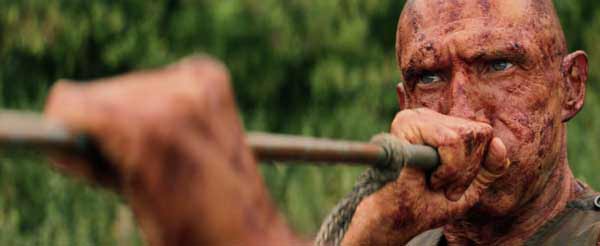
Photo Courtesy of Sony Pictures Releasing
28 YEARS LATER: THE BONE TEMPLE
by Justin Tanner
When I was a kid, I loved being scared. On Saturday nights, a local TV program called Creature Features ran a double bill of horror films: the 8 o’clock slot leaned toward family fare — “Son of Godzilla,” “The Mummy’s Ghost,” “Dracula” — while the 10 o’clock film skewed more adult, with titles like “Alice, Sweet Alice,” “Blood on Satan’s Claw,” and “Lady in a Cage.” Those were the ones that lingered. At some point, my parents stopped letting me stay up for the later feature. I was having nightmares — waking up crying, loud enough to rouse the house — and their solution was simple: no more scary movies. I remember the night “Night of the Living Dead” played. My brother watched it while I lay in my room listening through the wall. I couldn’t see the images, but the sounds — the chewing, the screaming — were enough. What I imagined was almost certainly worse than anything on screen.
Later, as an adult, I sought out the films I’d been denied: “The Texas Chain Saw Massacre,” “Black Christmas,” “Rabid,” giddily reveling in their gruesome tangibility. I remember watching “Theatre of Blood,” the 1973 Vincent Price movie about a middling West End actor who begins murdering the London critics who panned his work using methods drawn from Shakespeare’s plays. I loved the premise, but watching it, I felt a pit open in my stomach. Here was a psychopath taking visible pleasure in constructing elaborate scenarios to torture and kill his victims — and worse, he had an audience: a ragtag chorus of unhoused followers, cheering him on, turning each murder into a performance. I couldn’t articulate it then, but something felt deeply off — not frightening in the way ghosts or monsters are frightening, but corrosive, as if the film were inviting me to participate in the spectacle. Years later, I felt that same unease watching “Se7en,” where another methodical killer stages increasingly grotesque punishments. By then, the “fear of a horrible death” had taken on a different weight. It wasn’t just about what might happen to the body, but what it suggested about the world — a creeping moral exhaustion, a culture growing numb to suffering even as it fixates on it. These films didn’t just scare me. They suggested something worse — that the violence wasn’t aberrant, but inevitable. After 9/11, the floodgates opened — beginning, oddly enough, with “The Passion of the Christ,” and accelerating into “Hostel,” the “Saw” films, and a wave of grim, punishing horror from “Wolf Creek” to “Eden Lake,” alongside remakes like “The Hills Have Eyes” and “I Spit on Your Grave.” The genre found its name when David Edelstein dubbed it “torture porn” in a 2006 review. These were films I didn’t even need to see. A one-sentence synopsis was enough to crawl inside my head and take up residence. I didn’t just avoid them; I resented their existence. Worse, I’d occasionally stumble into one by accident — settling in for what seemed like a routine chiller, only to find someone strapped to a chair, the instruments of torture laid out with ritual precision. Before I knew it, I was elbow-deep in blood, scrambling for the mute button before the screams could lodge themselves in my brain.
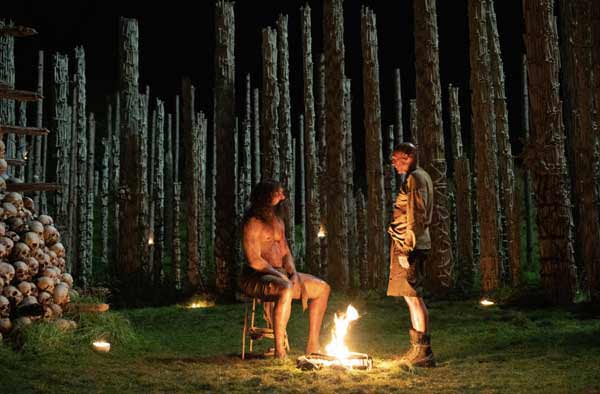
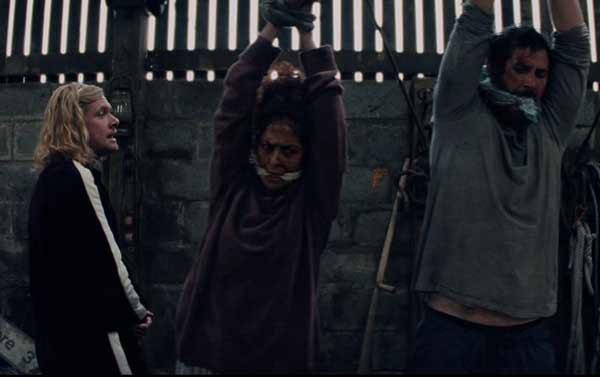
Around 2010, fatigue set in as repetition became the point, and the nihilism itself grew off-putting. Meanwhile, supernatural and so-called elevated horror moved to the forefront — films less reliant on ferocity than on psychological dread. Cruelty gave way to imagination. Then came COVID — isolation, anxiety, prolonged unrest — and the appetite for extremity returned. Watching at home, the experience became more intimate — the “porn” aspect newly pronounced. Atmospheric horror gave way to unapologetic, practical effects-driven gore, exemplified by the “Terrifier” films — thrill-seeking spectacles that advertise exactly what they are. You’re there to watch prolonged brutality in an almost gladiatorial environment, the audience encouraged to cheer as the violence tips past realism into grotesque absurdity. Which brings me to “The Bone Temple.” I had seen “28 Days Later” and both its sequels on the big screen. These films are barbaric, yes — but there’s a distinction. Zombie violence is impersonal. The creatures aren’t enjoying what they do. Death comes quickly. No one is restrained and made to suffer. And at first, “The Bone Temple” presents as just another chapter, though perhaps more stylishly directed by Nia DaCosta (”Candyman”). There’s an uncomfortable “Game of Thrones” sequence where a child is forced to fight an adult to the death, and we’re introduced to a pack of raving lunatics dressed up like notoriously prolific British pedophile Jimmy Savile (which is inexplicably played for laughs). Ralph Fiennes returns as Dr. Ian Kelson — his skin dyed red with iodine, a supposed safeguard against the rage virus that has reduced the British Isles to a mosh pit of zombies, wig wearing maniacs, and the occasional ordinary person just trying to get through the day. And there’s a subplot involving a partially humanized infected named Samson (Chi Lewis-Parry) — a towering, naked brute, partially cured by psychotropic drugs — and the suggestion of an uneasy romance with Dr. Kelson. But then we meet a pregnant woman and two male companions fighting with some infected in the forest. After one of the men succumbs to the virus and the other two flee back to their farm, they discover that the Jimmy Savile crew has already invaded and intends to kill everyone as some kind of offering to Satan by skinning them alive. What follows is a sequence of such sadistic nastiness, such random merciless cruelty inflicted on kind people by laughing maniacs that I went into a sort of dissociative state, defocusing my eyes to avoid the ugliness in front of me. It involved people being strung up with ropes while the giggling fiends danced like Teletubbies and gouged out hunks of flesh from their shrieking victims. At some point one of the creeps onscreen threw up in disgust, but it might as well have been me. There isn’t much more to say about “The Bone Temple” since I stopped processing the film after that, though I dimly remember some well staged action sequences, some Duran Duran playing on the soundtrack and a vague hope — shameful in its intensity — that the monstrous leader of the maniacs (Jack O’Connell) would get his comeuppance. Because watching the torture of innocents, even as manufactured drama, breeds a kind of rot in my limbic system — a reflexive hunger for commensurate retribution. And it’s an impulse I’m no longer interested in indulging because the images linger and take up space. And life is simply too short. So I’ll be eschewing the dubious pleasures of this new exciting breed of film. I’m happy to leave that appetite to others. In the future if I want some mild frights I’ll rewatch something like “Rosemary’s Baby” — where the horror comes from what you imagine, not what you’re made to endure. |
|
An LA-based playwright, JUSTIN TANNER has more than twenty produced plays to his credit, including Voice Lessons, Day Drinkers, Space Therapy, Wife Swappers, and Pot Mom, which received the PEN-West Award for Best Play. He has written for the TV shows Gilmore Girls, My So-Called Life and the short-lived Love Monkey. He wrote, directed and edited 88 episodes of the web series Ave 43, available on YouTube. Tanner is the current Playwright in Residence for the Rogue Machine Theatre in Hollywood, where his most recent play My Son the Playwright, of January of 2026, was met with rave reviews. Travis Michael Holder of the LA Drama Critics Circle wrote, "a phenomenal new achievement by local counter-culture hero Justin Tanner.”
|

To receive a free subscription to our Sunday Lounge! newsletter, Click Here
Have a suggestion? Send an email to the Editor, Click Here