





Filmmakers, Screenwriters, Performance, Reviews, Film Reviews, Streaming

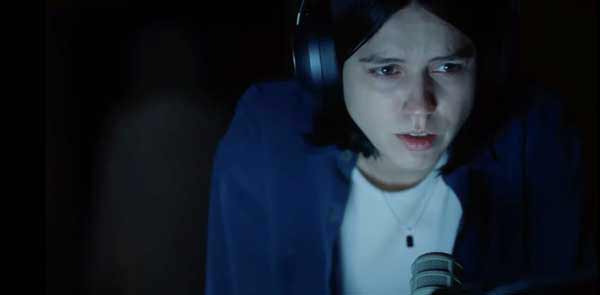
Photo Courtesy of A24
UNDERTONE
by Justin Tanner
Horror movies are having a moment. Then again, horror movies always seem to be having a moment. As one of the few genres that can still be produced cheaply and return astronomical profits, horror has long been Hollywood's most reliable investment. But the past year has felt different. May alone saw the release of André Øvredal's "Passenger," Damian McCarthy's "Hokum," Kane Parsons' "Backrooms," and most remarkably, Curry Barker's "Obsession," which has grossed more than $224.7 million worldwide against a reported budget of just $750,000. The fact that two of those films, "Backrooms" and "Obsession,” were feature debuts from filmmakers who built audiences on YouTube before ever stepping onto a soundstage may be the most significant detail of all. Hollywood has spent much of the post-COVID era trying to lure audiences back into theaters with superheroes, legacy sequels, and video game adaptations. But there are growing signs of franchise fatigue, and a new generation of filmmakers is beginning to emerge from outside the traditional studio system. It's a development that bears a passing resemblance to the early 1970s, when filmmakers like Scorsese, Coppola and De Palma arrived with a fundamentally different understanding of what movies could be. The circumstances, and artistic quality, are obviously different ("Obsession" is no "Mean Streets"), but the disruption feels familiar. Which brings me to "Undertone," Ian Tuason's feature debut. Premiering at Fantasia before moving to Sundance and an eventual bidding war won by A24, the film arrived trailing considerable buzz. Marketed as "the scariest movie you'll ever hear," it promised a uniquely claustrophobic nightmare built largely from sound. And personally, I couldn't wait. Audio horror has fascinated me for decades. I still remember William Peter Blatty appearing on David Letterman in the early 1980s and playing a recording of white noise that supposedly contained voices hidden beneath the static. The idea that the dead, or something worse, might communicate through fragments of recorded sound has always unnerved me. So "Undertone's" premise, a supernatural horror podcast investigating haunted audio recordings, was right in my wheelhouse. And the trailer was terrific. The movie, however, is not. To be fair, the sound design is often excellent. Layers of demonic voices, children singing backwards, ominous offscreen thumps and the labored breathing of a dying woman upstairs create an atmosphere that is frequently unnerving. The sound design isn't the problem. The problem is that all of this craftsmanship is in service of a story that's impossible to believe. Not because of the supernatural elements — I'm perfectly willing to accept haunted recordings, malevolent spirits, and voices from beyond the grave — but because the podcast at the center of the film isn't credible for a second. And if you don't believe the podcast, you can't believe anything built on top of it. It's like setting a movie in a restaurant where nobody knows how to cook. But I'm getting ahead of myself. "Undertone" tells the story of Evy Babic, a reclusive young woman who hosts a weekly paranormal podcast with her friend Justin, built around the classic believer-versus-skeptic dynamic popularized by "The X-Files." Each week, the pair analyze allegedly haunted audio recordings, Justin championing a supernatural explanation while Evy attempts to debunk it. When Justin receives an anonymous email containing ten mysterious audio files, he brings them to the show and the pair begin examining the recordings one by one. It's a tantalizing setup, but anyone who regularly listens to podcasts knows the medium lives or dies on chemistry. Good co-hosts don't merely exchange information; they create a relationship listeners want to spend time with. Evy and Justin never develop that rapport. Their conversations feel stiff and oddly detached, as if they're meeting for the first time rather than hosting an established show. Podcasters should be able to talk. Vamping, riffing, interrupting, and bouncing off one another ought to be second nature. Instead, they sound like they're at a bad audition — the kind where nobody gets a callback. And the work ethic on display is absurd. Why would seasoned podcasters record a forty-minute show in five-minute chunks, constantly interrupting their own momentum? Every time the conversation threatens to become interesting, Evy suggests they call it a night and pick things up a few days later. It's a podcast built around suspense that seems actively hostile to building any. It reminded me of Sarah Polley's "Women Talking," in which every time the title activity is about to occur, someone proposes taking a break. Director Ian Tuason conceived the project while serving as the primary caregiver for his terminally ill parents, an experience marked by exhaustion, sleep deprivation, and chronic stress. He even filmed "Undertone" in his parents' home to capture some of that oppressive reality.
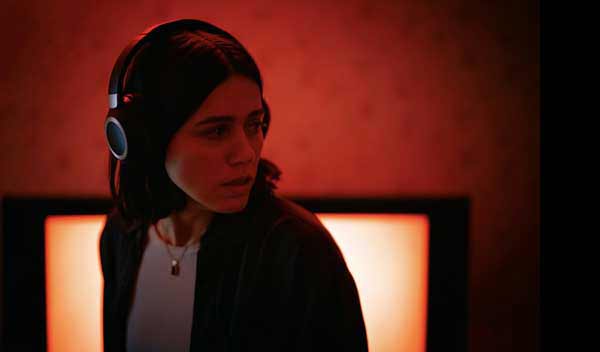
Yet very little of that experience makes it to the screen. Though Evy shares the house with her comatose mother and repeatedly references her caregiving responsibilities, we rarely see her actually providing care beyond a single scene in which she cleans up after an accident. Mom is less a character than an atmospheric device, appearing whenever the screenplay needs to remind us that Evy is under strain. But the actual burden of caregiving is largely implied rather than dramatized, leaving her deteriorating state of mind untethered from reality. Without that context, Evy doesn't seem exhausted so much as cranky and bored. Since the movie has almost no structure, with scenes unfolding in a repetitive parade of sameness, it’s essential that the ten recordings provide some sense that the story is moving forward. In Brad Anderson's "Session 9," another horror film built around a series of audio recordings, each tape brings us closer to a horrifying revelation, not merely adding information, but deepening the mystery and escalating the dread. The files in "Undertone" do neither. They simply repeat, reinforce, and reiterate, and the reason for their existence is never convincingly explained. Like so much else in the film, they feel less like a fully realized idea than a placeholder waiting for one. Ironically, the strongest version of "Undertone" might have been the simplest one. Imagine a true one-woman chamber piece. No visible mother. No interruptions. Just Evy alone in a house, listening to increasingly disturbing recordings while some unseen presence gradually invades her reality. The isolation would become unbearable. The audience would have nowhere to escape. Instead, the film repeatedly dilutes its own strengths by introducing elements it never fully commits to. Even the mother's presence eventually becomes ambiguous, with late scenes hinting that she may have died earlier than we've been led to believe. By this point, however, the film has introduced so many possibilities without fully developing any of them that the ambiguity feels less like design than indecision. The result is a horror film in which every narrative thread remains strangely weightless. The podcast doesn't feel authentic. Neither does the caregiving. And the supernatural threat, lacking any convincing foundation beneath it, never has a chance to get under our skin and actually scare us, leaving the film's carefully crafted atmosphere with nothing solid to settle upon. For a movie called "Undertone," there's surprisingly little beneath the surface. AVAILABLE TO RENT ON AMAZON PRIME |
|
An LA-based playwright, JUSTIN TANNER has more than twenty produced plays to his credit, including Voice Lessons, Day Drinkers, Space Therapy, Wife Swappers, and Pot Mom, which received the PEN-West Award for Best Play. He has written for the TV shows Gilmore Girls, My So-Called Life and the short-lived Love Monkey. He wrote, directed and edited 88 episodes of the web series Ave 43, available on YouTube. Tanner is the current Playwright in Residence for the Rogue Machine Theatre in Hollywood, where his most recent play My Son the Playwright, of January of 2026, was met with rave reviews. Travis Michael Holder of the LA Drama Critics Circle wrote, "a phenomenal new achievement by local counter-culture hero Justin Tanner.”
|

To receive a free subscription to our Sunday Lounge! newsletter, Click Here
Have a suggestion? Send an email to the Editor, Click Here