





Filmmakers, Screenwriters, Performance, Reviews, Film Reviews, Streaming

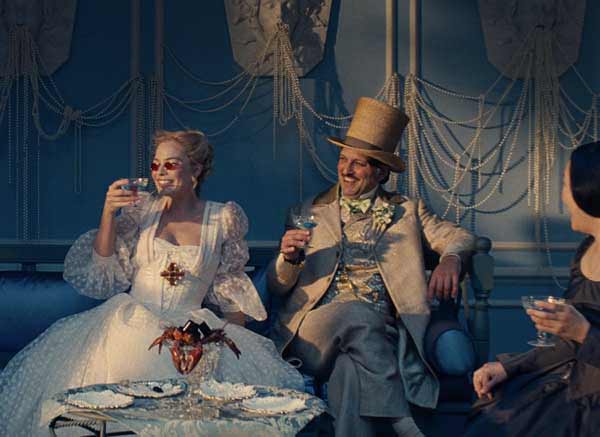
Photo Courtesy of Warner Brothers Studios
WUTHERING HEIGHTS
by Justin Tanner
Emerald Fennell’s hopped-up adaptation of Emily Brontë’s 1847 gothic novel Wuthering Heights is a trashy hoot — until it’s not. Fennell brings plenty of conviction, and with cinematographer Linus Sandgren’s saturated imagery — shot in VistaVision 35mm — alongside Suzie Davies’s giant-dollhouse production design and Jacqueline Durran’s drolly anachronistic 1970s beauty-pageant costumes, she has all the tools she needs to conjure a phantasmagoria of woozy delirium — one that always gives us something to look at, even when the story runs aground. This is well-trodden territory, with no fewer than thirty film and television adaptations worldwide. So it’s no surprise that Fennell — like most filmmakers who’ve tackled the novel — plays fast and loose with the plot, including the decision here to merge Cathy’s father and brother into a single character.
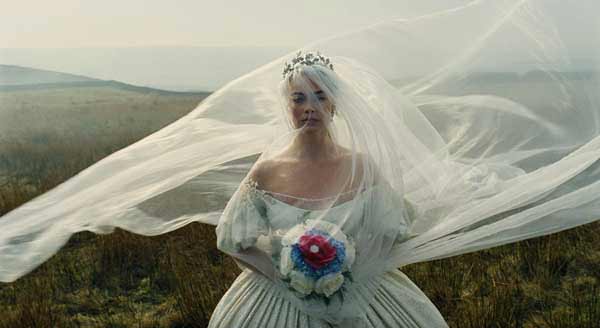
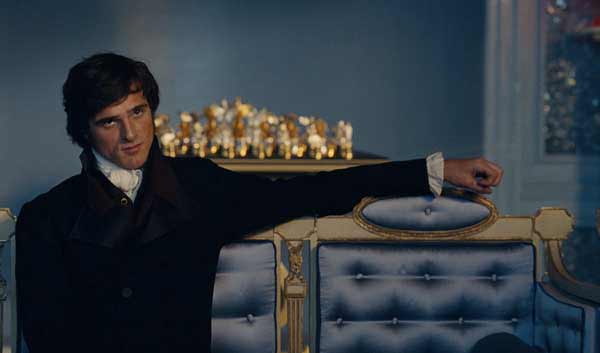
Where Fennell truly strays — and boy does she — is in transforming the Victorian novel’s suggestive restraint into something closer in spirit to “Fifty Shades of Grey.” What begins as bawdy titillation quickly tilts toward absurdity, plunging the film into a lurid world of B&D spectacle — including one scene in which a woman bites down on a horse bridle while being whipped by her partner. Clearly, belaboring the obvious is not something Fennell shies away from. In fact, the first sounds we hear, before the image even appears, are the rhythmic creak of what seems to be a bed frame, accompanied by the heavy breathing of a man approaching sexual climax — only for the shot to reveal a man hanging from the gallows, gasping for air as he dies. Fennell’s blunt invocation of Freud’s Eros and Thanatos is startling, made all the more disturbing by the sight of the dying man’s erection — pointed out by a child who blurts, “Look, he’s got a stiffy,” while a nearby nun watches with shamed fascination. It’s so audacious — and so repellent — that I found myself ready for anything, though not entirely sure I wanted to see what came next. Thankfully, the film pulls back from this salacious ledge long enough for the story to take hold, with a mostly remarkable cast — especially Martin Clunes as Mr. Earnshaw — holding their own against overripe — if occasionally rotten — art direction: stunning blood reds, ice blues, and deep forest greens at Linton Manor; spoiled food and piles of vomit for the Earnshaws. Fennell’s postmodern approach recalls Peter Greenaway’s “Prospero’s Books” and Joe Wright’s 2012 “Anna Karenina,” though without their supple inventiveness. And while she occasionally delivers a genuinely amusing visual flourish — like Cathy’s life-size lobster brooches, each topped with a tiny hat and pinned inexplicably to her pristine white dress — there simply aren’t enough ideas to sustain this level of stylization for 136 minutes without lapsing into repetition. One unintended benefit of that sprawl, however, is the opportunity to linger over the production design — to do a bit of fantasy shopping among the wildly eccentric vintage tchotchkes and distressed heirlooms cluttering the interiors. And the romantic beats land for the most part, with Cathy and Heathcliff set up nicely as sparring partners struggling against the magnetic sexual pull of fate. But then Fennell makes the ruinous decision to have them consummate what, in Brontë’s novel, remains a platonic — if emotionally obsessive — bond, transforming them from yearning would-be lovers, poised on a razor’s edge of attraction and denial, into something closer to perfume models: lifelessly draped across one another in a graphic montage of bizarrely staged, distinctly unsexy encounters that drain the story of its tension. Jacob Elordi and Margot Robbie are competent enough as romantic leads, though Elordi’s brooding hardens into inertia, and Robbie seems at least a decade too old for the role. The script has her father call her “well past spinsterhood,” which may justify the choice on paper, though she still registers as a bored teenager. Boredom, in fact, seems to be the major theme of Fennell’s adaptation. The oversized rooms where Cathy lives with her husband Edgar Linton (Shazad Latif) are filled with negative space, like museum galleries, where everyone seems to sit in dormant tableaux staring into the middle distance.
The exception is Alison Oliver, whose vibrant performance as Isabella Linton, Edgar’s ward, lifts the film every time she appears onscreen. Even when asked to engage in extraordinarily strange behavior — like the late scene in which Isabella is chained to a fireplace pretending to be a dog while Heathcliff hand-feeds her (don’t ask) — Oliver gauges her performance perfectly, seeming to understand (like Clunes as Cathy’s father) how best to navigate this weird hybrid of Brontë melodrama and influencer theater. By walking right up to the line of camp without stepping over it, they give us permission to laugh without breaking the spell. Everyone else — even the estimable Hong Chau as Cathy’s treacherous servant Nellie — leans too heavily into the drama, draining the fun from what otherwise looks, at least on the surface, like a romp. Still, it all might have worked had Fennell not allowed the film to stall so egregiously in the final third. What should escalate instead slackens: the takes lengthen, the silences stretch. Just when the narrative cries out for a brisk trot to the finish, she hits the brakes. Like an unsatisfying sexual encounter, the film doesn’t climax so much as fizzle — leaving us teased, stranded, and more than a little irritated. |
|
An LA-based playwright, JUSTIN TANNER has more than twenty produced plays to his credit, including Voice Lessons, Day Drinkers, Space Therapy, Wife Swappers, and Pot Mom, which received the PEN-West Award for Best Play. He has written for the TV shows Gilmore Girls, My So-Called Life and the short-lived Love Monkey. He wrote, directed and edited 88 episodes of the web series Ave 43, available on YouTube. Tanner is the current Playwright in Residence for the Rogue Machine Theatre in Hollywood, where his most recent play My Son the Playwright, of January of 2026, was met with rave reviews. Travis Michael Holder of the LA Drama Critics Circle wrote, "a phenomenal new achievement by local counter-culture hero Justin Tanner.”
|


To receive a free subscription to our Sunday Lounge! newsletter, Click Here
Have a suggestion? Send an email to the Editor, Click Here