





Filmmakers, Screenwriters, Performance, Reviews, Film Reviews, Streaming

All Photos Courtesy of Cineverse
A USEFUL GHOST
by Justin Tanner
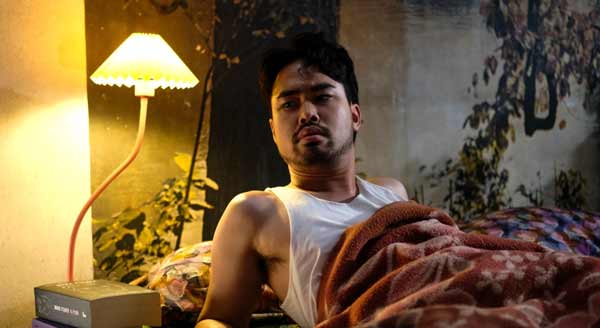
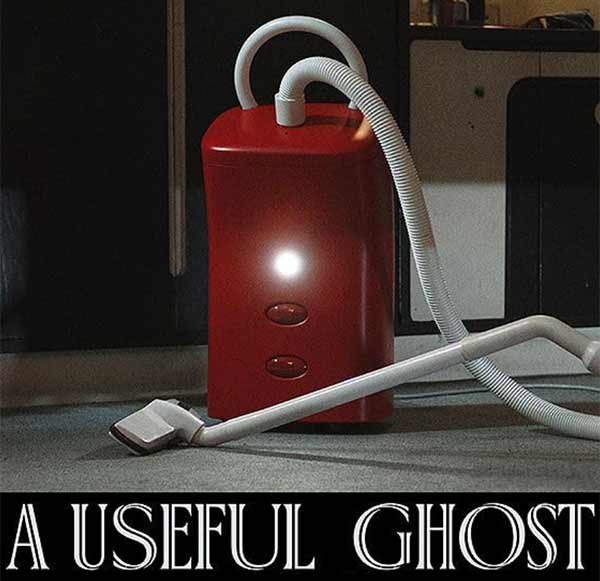
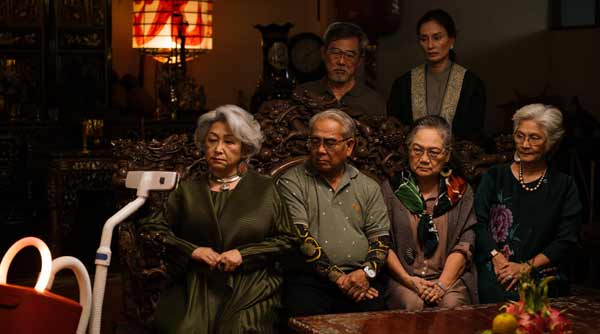
Dust is a major motif in "A Useful Ghost," both literally and metaphorically. As director Ratchapoom Boonbunchachoke has explained, "Dust doesn't only mean airborne particles but also people who lack voices or power to determine their own lives." The film adds another layer almost immediately. In the opening scene, a large 1930s plaster relief is demolished to make way for a modern Bangkok shopping mall. As the dust billows into the air, it comes to represent something else entirely: the political erasure of history. The symbolism isn't subtle, nor is it meant to be. Yet that's part of the film's charm. Even as the story grows increasingly fantastical and the ghost of the title takes center stage, Boonbunchachoke never lets the underlying ideas disappear. "A Useful Ghost" is unapologetically political. It's also very funny. Wisarut Homhuan plays a self-described "academic ladyboy" who's having a dust problem in his tiny apartment, though his facial hair and conventionally masculine dress make it clear Boonbunchachoke isn't using the term as a transgender signifier, but in the older, looser sense: an effeminate gay man. Or, as the film's refreshingly explicit third act makes unmistakably clear, a bottom. “Mere particles of dust in the room changed my ladyboy life forever,” he says, and he’s not exaggerating. His crusade against dust leads him to buy a vacuum cleaner inhabited by a ghost who responds by coughing every bit of it right back out. As ridiculous as it sounds, the film commits fully to the idea that a nearby electrical appliance plant, whose prevalence of dust led to the death of one of the workers, has started producing vacuums possessed by the recently dead. When the ladyboy calls for a repairman, the strikingly handsome Krong arrives, and the film pivots into an unexpectedly tender romance. While their attraction simmers, Krong gradually unspools the tragic history of the vacuum cleaner factory, which becomes the film's central narrative. It's there that we meet Suman, the factory's female manager, played with exquisite understatement by former supermodel Apasiri Nitibhon. After watching an air purifier — possessed by the spirit of a dead employee named Tok — thrash across the floor wheezing, "I can't breathe!" before collapsing into silence, Suman turns to a nearby worker and asks, without the slightest hint of alarm, "Can we still sell it?" Later, when Tok possesses the factory's giant extractor fan, whipping its long ducts through the air like the tentacles of an enormous squid, Suman sighs, "Why are you harassing us, Tok? I paid for the noodles at your funeral." That's the film's comic genius. Nobody questions the ghosts. They simply accept them as another workplace inconvenience, somewhere between faulty wiring and a termite infestation. The problem isn't whether the hauntings are real. It's figuring out how to get rid of them. Suman's troubles become more personal when her son March, whose wife Nat recently died of a respiratory illness, is seduced by an upright vacuum cleaner possessed by her ghost. Discovering her son having his bare nipple stroked by the appliance's hose and dusting brush, Suman sighs, "March. That is not how we use a vacuum cleaner," before having him committed to a psychiatric hospital. From there, the film gradually sheds its comic playfulness. As Suman and her family resort to increasingly desperate — and increasingly brutal — methods to separate March from Nat's ghost, the story reveals the genuine heartbreak beneath its ridiculous premise.
Every supernatural movie has to establish its own rules, and "A Useful Ghost" seems to make up three new ones every ten minutes. They're less interested in satisfying the logician than the satirist, but that's perfectly in keeping with the film's worldview, where symbolism always trumps realism. And while the deadpan absurdity inevitably recalls the work of Yorgos Lanthimos, Quentin Dupieux, Aki Kaurismäki, and Wes Anderson, Boonbunchachoke never feels derivative. His secret weapon is melancholy. Beneath every absurd gag lies a surprising amount of tenderness. Never more so than in the gentle rhythms of the framing story, where the Ladyboy and the vacuum repairman discover their mutual attraction. When the inevitable complications arise, their relationship acquires an emotional weight that catches you by surprise. Suddenly there are real stakes, and beneath all the political allegory and supernatural invention is a simple hope that these two lonely people might somehow find happiness. For all the intelligence of the film's second half, I found myself missing the lightness of its opening hour. Boonbunchachoke has serious political concerns on his mind, and given Thailand's history of military coups and constitutional upheaval, it's easy to understand why. But as the satire grows more pointed, the whimsy gradually recedes. The ideas remain provocative; the film simply becomes a little less joyful.
Still, it's a remarkable debut, full of daring ideas and genuine laughs. Looking at the dust gathering on my desk as I write this, I can't help seeing it differently now: history, memory, and the voices of people swept aside and forgotten. It's no small achievement to make something so ordinary feel so newly significant. STREAMING ON AMAZON PRIME |
|
An LA-based playwright, JUSTIN TANNER has more than twenty produced plays to his credit, including Voice Lessons, Day Drinkers, Space Therapy, Wife Swappers, and Pot Mom, which received the PEN-West Award for Best Play. He has written for the TV shows Gilmore Girls, My So-Called Life and the short-lived Love Monkey. He wrote, directed and edited 88 episodes of the web series Ave 43, available on YouTube. Tanner is the current Playwright in Residence for the Rogue Machine Theatre in Hollywood, where his most recent play My Son the Playwright, of January of 2026, was met with rave reviews. Travis Michael Holder of the LA Drama Critics Circle wrote, "a phenomenal new achievement by local counter-culture hero Justin Tanner.”
|


To receive a free subscription to our Sunday Lounge! newsletter, Click Here
Have a suggestion? Send an email to the Editor, Click Here