





Filmmakers, Screenwriters, Performance, Reviews, Film Reviews, Streaming

All Photos Courtesy of Warner Brothers Pictures
DIGGER
by Justin Tanner
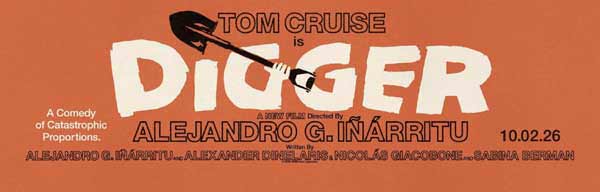
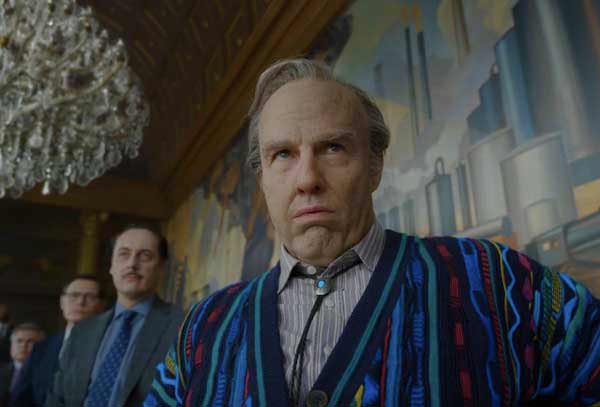
It’s no fun disliking a movie. Even with actors or directors I’m not fond of (Tom Cruise, for instance), I never go in hoping for failure. When the lights go down I cross my fingers and wish everybody well. Connection is what I’m after. When it happens I’m delighted. When it doesn’t, well, it’s up to me to figure out why. “Digger,” Alejandro González Iñárritu’s latest film, which opened last weekend to a confounding, yet vaguely thrilling, dichotomy of opinions from audiences and critics alike, was not an easy film to watch. Almost from the first frame it seemed to be working overtime to drive me absolutely batshit crazy. The set design and color palette are almost defiantly ugly. The soundtrack, a kind of faux calliope engineered from recordings of endangered birds, produces a seasick, hungover effect not unlike those final moments before a night of drinking comes back up. And that’s before Tom Cruise, swaddled in a latex fat suit and unconvincing jowls, starts bellowing his dialogue in a Foghorn Leghorn accent. Or the repulsive animatronic cat appears, looking obviously fake while everyone treats it as real. If there was ever a movie designed to function as an emetic through sheer artistic unpleasantness, “Digger” may be it.
Wes Anderson has been working in a similarly heightened register for decades with mannered performances and obsessively over-designed mise-en-scène. His confections can certainly cloy — “The French Dispatch” was like being force-fed 30 pounds of marzipan with a teaspoon — but the artificiality is governed by a skillfully composed aesthetic. No matter how stylized the vision, its artistry is unmistakable. Iñárritu’s vision seems less concerned with beauty than with seeing how energetically it can yank us out of our comfort zone. “Digger,” like an unruly drunk at an Xmas party, shouts in our faces at full volume until the choice seems to be give in or go home. The plot concerns Digger Rockwell, an oil baron (Cruise), who wakes up to a global catastrophe involving his latest drilling operation. The rest of the story is just a series of back-and-forth arguments between Digger and the powers that be about who’s to blame and how to solve the problem, if it’s not too late. Cruise is clearly relishing the opportunity to indulge his inner hambone, and at first it’s fun watching him cut loose after spending much of the past two decades acting out variations on the straight-faced savior of the world. But "Digger" gives him little to play beyond vaudeville capering: he’s essentially Mr. Burns with an overblown Texas accent. The dialogue, though pitched as satire, doesn’t so much as raise a smile. Like a disastrous night at a comedy club when the performer is bombing but refuses to acknowledge it, the film keeps hammering away as the silence in the room grows increasingly painful.
Spoiler Alert: I’m about to reveal the solitary trick “Digger” has up its sleeve. So proceed at your own risk. Roughly thirty minutes into the film, it’s revealed that everything we’ve been watching — the fake cat, the overblown performances, Cruise’s bad accent — is actually part of a play that’s being rehearsed. Cruise isn’t Digger at all. He’s Curtis, an actor playing Digger in an enormously expensive (and technically impossible) revival of a celebrated play called “Fossil Fools” (groan). Suddenly the artificiality makes sense. The acting is exaggerated because these are actors performing for an audience. Even the unconvincing dialogue can be explained as having been written by somebody inside the world of the movie. Better still, when Cruise sheds the Digger character, something rather wonderful happens: he becomes a completely different actor. As Curtis, he’s quiet, sweet, vulnerable and unexpectedly charming, displaying a naturalness I can’t remember ever seeing from Cruise. After 30 minutes of Foghorn Leghorn, the transformation comes as an enormous relief. Great, I thought. Now the movie can begin. Except it doesn’t. Before long, we’re right back inside “Fossil Fools,” with more bad acting, bad writing, and inexplicable production design. We’re asked to suspend our disbelief to include hundreds of extras and gigantic sets that even a movie soundstage would have trouble accommodating. But the tone that might allow such flights of fancy is never established. The production is connected to neither theatrical reality nor convincing fantasy. It’s simply unpersuasive. Meanwhile, a troubling question occurred to me: Why should discovering that we’re watching a play explain why everyone is acting so badly? Shouting and overplaying are not intrinsic qualities of stage performance. Theater can be as quiet and psychologically precise as film. Yet “Digger” seems to use theatricality as an all-purpose excuse for everything that feels false about the movie. The play-within-a-film conceit allows Iñárritu to distance himself from the narrative clumsiness — “It’s only a play!” — while giving the whole thing an additional layer of commentary on the climate catastrophe. What it feels like is a cheat: an attempt at Brechtian alienation that never coheres. We’re left with something like children performing Pirandello. You want to cheer the effort, but you can’t overlook the fact that it still stinks. More confounding is that, in the world of the movie, “Fossil Fools” is considered a great piece of theater. Not only that, it turns out to be a biography of an actual person who caused the global catastrophe these people are now living through. The extent of that catastrophe becomes clear when we finally leave the theater: people wear gas masks outdoors while robots and drones police the streets.
Yet the movie never plausibly explains why this devastated society has turned “Fossil Fools” into a revered cultural institution, much less why it would devote such staggering resources to mounting it on this scale. More baffling still is what this supposedly great play finally offers its audience: a lecture on their own culpability. In a long, excruciating monologue, "Digger" implicates the audience (and us, by extension) in their own fate. And this is where I cut ties with the film altogether. While speaking to the European Parliament on yet another gigantic, hideous set, "Digger" culminates his diatribe by saying, in effect “You wanted all the things oil provides like cars and private jets, how dare you place all the blame on me.” The movie appears to offer this not as another example of "Digger's" monstrous self-justification, but as an uncomfortable truth we’re meant to consider. And certainly it’s an argument worth making. The relationship between corporate greed and consumer appetite is considerably messier than a simple story about evil businessmen destroying the planet. We enjoy the conveniences produced by the systems we condemn.
But “Digger” doesn't explore that contradiction so much as weaponize it. After spending most of the movie blaming Digger and the interests he represents, it turns around and points the finger at us. Everyone participated. Everybody’s guilty. So what now? Apocalyptic satire can actually work. Kubrick turned nuclear annihilation into one of the funniest movies ever made with “Dr. Strangelove.” But “Digger” seems to forget that if you’re going to scream at an audience for two hours, you better make them laugh. “Digger” just wants to shake a finger at us and say “I told you so,” to people who already know. At the end of “Fossil Fools,” the audience files out of the theater, puts on its gas masks and returns to the poisoned world waiting outside while Melanie’s “Look What They’ve Done to My Song” plays plaintively on the soundtrack. Message received. Look what we’ve done. Now put on your gas mask and go home. There’s a difference between confronting hopelessness and surrendering to it. There’s also a difference between plumbing the depths of despair and mistaking being a bummer for being profound. IN THEATERS |



|
An LA-based playwright, JUSTIN TANNER has more than twenty produced plays to his credit, including Voice Lessons, Day Drinkers, Space Therapy, Wife Swappers, and Pot Mom, which received the PEN-West Award for Best Play. He has written for the TV shows Gilmore Girls, My So-Called Life and the short-lived Love Monkey. He wrote, directed and edited 88 episodes of the web series Ave 43, available on YouTube. Tanner is the current Playwright in Residence for the Rogue Machine Theatre in Hollywood, where his most recent play My Son the Playwright, of January of 2026, was met with rave reviews. Travis Michael Holder of the LA Drama Critics Circle wrote, "a phenomenal new achievement by local counter-culture hero Justin Tanner.”
|


To receive a free subscription to our Sunday Lounge! newsletter, Click Here
Have a suggestion? Send an email to the Editor, Click Here