





Filmmakers, Screenwriters, Performance, Reviews, Film Reviews, Streaming

All Photos Courtesy of Focus Features
ELSINORE
by Justin Tanner
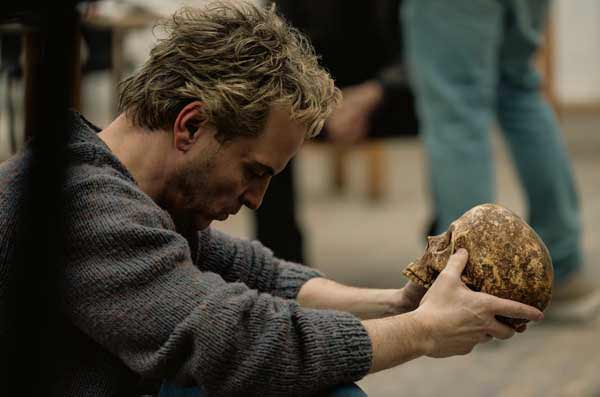
Actor Ian Charleson was best known for playing the Christian runner Eric Liddell in 1981’s “Chariots of Fire.” I saw the film as a teenager but remember next to nothing about it, apart from that ubiquitous Vangelis theme. “Elsinore,” which chronicles the last months of Charleson’s life, makes that point quite clear: strangers who recognize him invariably start humming the tune while he smiles patiently, conveying the exhaustion of being famous and unremembered at the same time. It’s a small narrative detail that, like nearly everything else in “Elsinore,” gets overplayed; a running gag in a film that doesn’t need one. And while much of director Simon Stone’s biopic works nicely, particularly Andrew Scott’s aching performance as Charleson, the film spends far too much time telling the wrong part of the story. Charleson, a closeted gay man who appeared in films like “Gandhi” and “Greystoke” but chose theater over a Hollywood career, contracted HIV in 1986. After years without symptoms, he’s offered the role of Hamlet at the National Theatre in 1989, just as the first Kaposi sarcoma lesion appears on his face. Should he accept a role whose physical and emotional demands might hasten his death, or concentrate on his rapidly declining health? It’s a remarkably potent dilemma. Turning it down might buy him time; accepting it might give that time meaning.
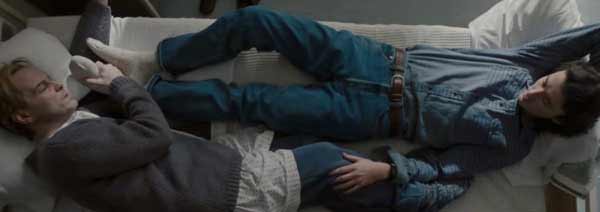
Scott is marvelous as Charleson. His performance largely avoids the histrionic traps inherent in the material, drawing us in through his humility and self-deprecation. Even as the film moves into more grandiose territory, Charleson remains recognizably human. And as long as the story remains in the theater’s rehearsal room, “Elsinore” is on fire. The central question of quality versus quantity of life comes vividly into focus whenever Charleson speaks Shakespeare’s words. These scenes are Scott’s sweet spot, and his ability to convey the joy of discovery as a performance takes shape is a marvel to behold. During a rehearsal of the scene in which Hamlet confronts Guildenstern, his reading of “Do you think I am easier to be played on than a pipe?” is as masterful a moment of acting as I've seen this year. But there’s also the familiar gay terminal-illness drama to contend with, and this is where “Elsinore” stumbles. We’ve seen this story before, from 1986’s “Parting Glances” to 2021’s “It’s a Sin,” and we know the dance steps by heart: diagnosis, denial, secrecy, disclosure, treatment, false hope, physical decline, acceptance, and aftermath. With enough imagination, of course, even this familiar formula can feel fresh. In “It’s a Sin,” Russell T Davies drew on his own experience of the AIDS crisis, filtering it through his gift for observation and dark humor. Arriving in the midst of the COVID pandemic, the series found a new resonance, its themes of fear and loss extending well beyond the particular tragedy it depicted. But Stephen Beresford’s rather pedestrian script seems more interested in checking off boxes than finding ways to freshen up the material. Like that tired old trope of having a woman throw up to foreshadow pregnancy, Beresford’s use of the portentous cough to signal physical decline inspires a knowing eye roll rather than alarm. His medical shorthand never rises above the rudimentary. We can tell exactly how sick everyone is by counting their sarcoma lesions. That’s a crude way of putting it, but since the script does precious little to distinguish the dying AIDS patients from one another, the medical scenes rarely rise above the level of an afternoon soap.
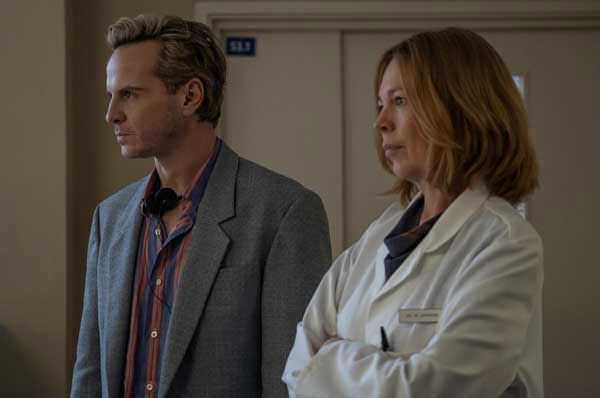
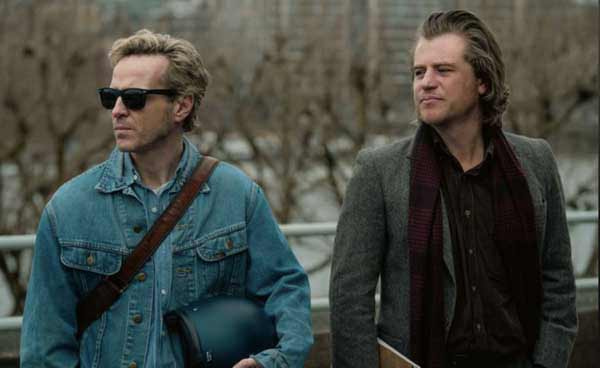
This extends to one of the film’s greatest disappointments: the unconscionable misuse of Olivia Colman. Cast as Dr. Margaret Johnson, one of the first British doctors to specialize in HIV treatment, Colman has rarely, if ever, been this dour. Even in “The Father,” dealing with Anthony Hopkins’s excruciating descent into dementia, she never lets us forget the pain simmering beneath her stiff upper lip. But as Dr. Johnson, nearly all her humanity has been buffed away. Positioned as the foil to Charleson’s Shakespearean ambitions, she’s handed an almost unplayable part. To sustain the conflict, her character must remain impervious to the possibility that a shorter, more fulfilling life might be preferable to a longer one. This grim determination to convey seriousness above all else robs Colman of her most satisfying qualities: charm, empathy, humor, and that impish spark of humanity bubbling behind her eyes. It’s a waste of one of the film’s richest resources. Still, the rest of the cast, especially Johnny Flynn as director Richard Eyre and Monica Dolan as the stage-door supervisor, do wonders with their brief screen time. And it’s lovely to see Juliet Stevenson again, bringing a warm grandeur to actress Sylvia Syms, cast as Hamlet’s mother, Gertrude. Halfway through “Elsinore,” Charleson develops pneumonia, and the film traps us at his hospital bedside as he writhes in discomfort. There’s nothing inherently wrong with depicting physical suffering, provided the pain serves a dramatic purpose and the director understands that a little goes a long way. Stone, however, seems determined to use every moment of agony he’s filmed, prolonging the ordeal until checking out becomes our only defense. Worse, these scenes undermine the calibrated beauty of Scott’s performance, pushing him toward indulgence. What began as a quiet marvel of understatement becomes hand-wringing melodrama, with a musical cue in the final twenty minutes that is the soundtrack equivalent of being Rolfed.
When Laurence Olivier adapted, directed and starred in “Henry V” in 1944, he trusted Shakespeare’s language to do the heavy lifting. His St. Crispin’s Day speech builds from conversation to rousing oratory without a note of music, its poetry and Olivier’s craftsmanship stirring the blood. Compare that with Kenneth Branagh’s 1989 version, which piles on the martial music until the scene nearly tips into parody. Shakespeare’s language is music enough. A swamp of urgent strings and horns only cheapens the effect. In its rehearsal scenes, “Elsinore” understands this perfectly. When Charleson simply speaks his lines, the poetry is unadorned, and it’s gorgeous. Scott’s half-casual readings bring an uncommon clarity to the densely lyrical speeches. Making sense seems to be his paramount concern, and Hamlet’s preoccupation with death echoes Charleson’s own predicament without any need for emphasis. But as opening night approaches, the music begins to leach into the proceedings: first a limpid piano telling us what to feel, then strings, and finally a full orchestra sawing away while we strain to hear Shakespeare over the ocean of bathos. Stone’s direction grows equally frantic. Rather than build toward an opening-night performance that might reveal the full extent of Charleson's achievement, he offers fragments from various points in the run, intercut with scenes of his anguish. We’re never allowed to hear enough of any speech to understand what his Hamlet might actually have been like. “To be or not to be” and “Alas, poor Yorick” turn up like greatest hits on an actor’s demo reel. What we’re crying out for is not an appetizer platter but a big fat steak we can actually chew on.
And by yanking us from stage to living room, from acting to anguish, Stone denies Scott the chance to build a performance. The result is exhausting rather than moving. The tears I'd anticipated from the start never arrive. Like a sneeze that builds to nothing, the film promises a catharsis it never delivers. There is one remarkable moment, though it belongs to David Dawson as the filmmaker Derek Jarman. Charleson visits him at his seaside cottage, where the two men argue affectionately about the cost of staying closeted in eighties cinema and the toll of their illness. Jarman, too, has AIDS. Suddenly their conversation stops, and Jarman stares out at the ocean. He says nothing. The camera simply holds on his heartbroken face. Eventually he tells Charleson, and us, what’s on his mind. Until then, we’re suspended in time. For once, Stone trusts us to look, listen, and feel without being told how. An actor's eyes accomplish what a hundred violins cannot. IN THEATERS
|


|
An LA-based playwright, JUSTIN TANNER has more than twenty produced plays to his credit, including Voice Lessons, Day Drinkers, Space Therapy, Wife Swappers, and Pot Mom, which received the PEN-West Award for Best Play. He has written for the TV shows Gilmore Girls, My So-Called Life and the short-lived Love Monkey. He wrote, directed and edited 88 episodes of the web series Ave 43, available on YouTube. Tanner is the current Playwright in Residence for the Rogue Machine Theatre in Hollywood, where his most recent play My Son the Playwright, of January of 2026, was met with rave reviews. Travis Michael Holder of the LA Drama Critics Circle wrote, "a phenomenal new achievement by local counter-culture hero Justin Tanner.”
|


To receive a free subscription to our Sunday Lounge! newsletter, Click Here
Have a suggestion? Send an email to the Editor, Click Here