





Filmmakers, Screenwriters, Performance, Reviews, Film Reviews, Streaming


All Photos Courtesy of Bleekcker Street
MUSK
by Justin Tanner
There are few things more dispiriting than the sight and sound of extremely rich people laughing at the misfortunes of the poor. It hits your sensibilities like a sucker punch. You struggle to understand not just the cruelty, but the apparent pleasure behind it. Something in the moral circuitry shorts out, and you're left wondering how human beings could possibly behave that way. In Alex Gibney's four-hour documentary “Musk,” we're treated to multiple scenes of Elon Musk and his circle of tech bros whooping it up as they destabilize, damage and disrupt their way across the tech world and beyond. First Twitter, then essential government programs, including FEMA and Social Security, come under attack. Musk and company appear to take the same pleasure in the destruction as little boys burning ants with a magnifying glass, and show the same indifference to the suffering they cause. Only we're the ants. Like the Marquis St. Evrémonde in Dickens' “A Tale of Two Cities,” who runs over a child in the street and blithely tosses a coin in compensation, Musk has the easy assurance of someone insulated from the consequences of his actions. The difference, of course, is that Dickens was writing about fictional characters, whereas Gibney is presenting a real person whose everyday actions increasingly affect the quality of our lives.
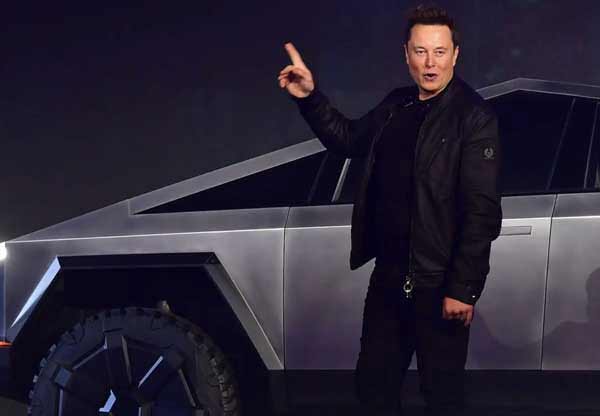
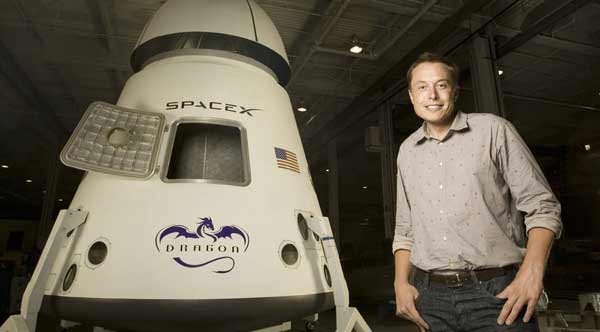
Watching these and other gut-wrenching scenes of blasé injustice filled me with a kind of outrage I hadn't felt in years. How did this man get so much power over us? Gibney, to his credit, spends the bulk of his exhaustive (yet never exhausting) film answering that very question. Our first glimpse of Musk as a dorky Silicon Valley entrepreneur elicited an audible giggle from the audience. Who was this almost sweet-looking office nerd? By 24, he'd co-founded Zip2, a company that essentially put the Yellow Pages online, followed by X.com, an early online banking venture. Though ousted from leadership at both companies, he emerged from their eventual sales with a fortune that helped finance SpaceX in 2002. If there's a chapter of Musk's story that comes closest to inspiring admiration, however reluctantly, it's his passion for space exploration. The sequences chronicling his repeated attempts to launch a rocket into orbit are exhilarating. Watching Musk in mission control, his hopes rising and falling with each test, we see him at his most human. And when the fourth attempt finally succeeds, the joy on his face is infectious. For its first half, “Musk” plays like a familiar account of an industry titan's rise: success, backroom deals, betrayals, and a moral compass that grows less reliable as his power expands. But Gibney's instinct for structure, cheeky imagination and ability to keep multiple balls in the air keep the narrative constantly in motion. It's in the second half, as Musk's power and influence grow to increasingly alarming proportions, that he becomes a far more disturbing figure. Gibney uses the 1937 British film “The Man Who Could Work Miracles,” a morality tale about the dangers of absolute power, as a kind of framing device. In it, three celestial beings grant an ordinary man the power to alter reality, just to see what he'll do with it. At first, he performs parlor tricks, like conjuring a kitten out of thin air. But once he realizes the extent of his powers, his ambitions grow increasingly grandiose. Before long, he's issuing impossible demands, attempting to bend the entire world to his will. Finally, enraged by the planet's refusal to cooperate, he stops the Earth from rotating on its axis, with catastrophic consequences. It's a particularly apt comparison, not just for the man-as-god metaphor, which Musk almost too neatly embodies, but for the manic intensity with which he pursues his desires. Whereas the younger Musk was determined to overcome the laws of gravity, the older Musk seems increasingly determined to overcome the constraints of society.
Gibney traces Musk's growing indifference to the human consequences of his actions with chilling efficiency. Early in the documentary, Musk argues that we may all be living in a simulation. At first, it sounds like existential clickbait, the kind of unprovable proposition that might keep a college dorm room arguing until dawn. But as “Musk” takes an increasingly sinister turn, the theory begins to acquire a more disturbing significance. Watching Musk treat other people's lives as abstractions, it's hard not to wonder whether he regards the rest of us as little more than NPCs (non-player characters) in a video game he's playing.
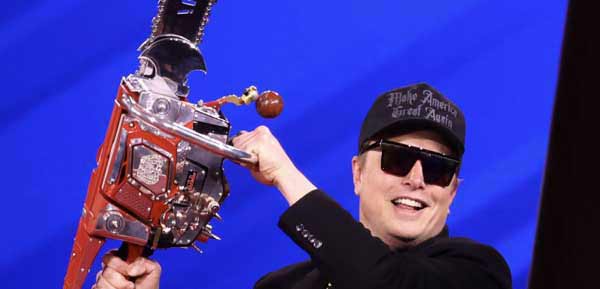
Gibney drives the point home with 3-D animation. As Musk and his Department of Government Efficiency (DOGE) set about dismantling federal agencies, the screen transforms into a first-person shooter game. Armed with a golden chainsaw, an unseen Musk races through Washington, D.C., slashing jobs and programs. In their place, piles of money materialize, as though every act of destruction earns the player another reward. There was a time when I considered Musk a voice of reason, particularly on climate change, which he once regarded as an existential threat. Today, however, his AI company, xAI, operates controversial methane-gas turbines in and around South Memphis, near predominantly Black, low-income neighborhoods, raising serious concerns about toxic emissions. Musk's political allegiances underwent a similarly dramatic reversal. Though a self-described independent, he'd voted, by his own account, “entirely Democrat.” But the COVID pandemic helped push him rightward. Furious over the shutdown of his Tesla factory, he found an unlikely ally in Trump, who publicly urged California to let the plant reopen. In 2021, Biden snubbed Musk by excluding him from a White House electric vehicle summit, reportedly because of Tesla's nonunion workforce. The slight, along with proposed wealth taxes and regulatory scrutiny of his companies, deepened his estrangement from the Democrats. He increasingly railed against the “woke mind virus,” which he blamed, among other things, for his transgender daughter's decision to change her name and gender marker. After initially expressing support for other Republican presidential hopefuls, Musk endorsed Trump following the assassination attempt in July 2024. What followed was an alliance of money and political power whose consequences are still unfolding. Gibney has described “Musk” as “a very dark comedy that turns to a horror film at the end.” Which pretty much sums it up. The absurdity on display almost defies rational comprehension. It's easier to imagine we're watching a parody of a dystopian future, with clowns and edgelords carving up the planet and serving themselves enormous slices of an ever-diminishing pie. But then the pitch-black reality starts to sink in. Musk has never been elected to public office, yet through DOGE he gained access to sensitive government information concerning millions of Americans. SpaceX's Starlink satellite network gives him enormous influence over global communications. And now he's been appointed to co-lead Project Meridian, a Pentagon initiative studying the future of warfare. In an interview with the Los Angeles Times, Gibney compared the prospect of Musk helping shape military strategy to “putting the Joker in charge of the Manhattan Project.”
Being in a packed movie theater as “Musk” reached its final moments was a decidedly strange experience. Gibney is careful not to pretend he knows what goes on inside Musk's head. Instead, he lays out the evidence, or as he puts it, “a fact pattern that I think should concern us.” Judging by the mood in the theater, that concern was shared by a roomful of deeply troubled moviegoers. On the drive home, I realized I was more frightened about the future than I could remember being after any film. My first impulse was to hug my husband, then call people I hadn't spoken to in a while and tell them I loved them. The feeling was irrational, perhaps, but powerful: that we were all living on borrowed time, and it would be foolish to waste any of it. And yet alongside the fear was something else, even stranger: genuine gratitude that I was not rich. Here was a man who seemed to have everything, yet nothing was enough. The threshold for satisfaction appeared to have risen so high that ordinary pleasure was beyond his reach. No wonder colonizing Mars had become such an obsession. Earthbound things could barely move the needle anymore. I can still be delighted when my cat rolls onto his back, by the first sound of rain on the roof, or by the first bite of an exceptionally good plate of pasta. Small things, to be sure, but not negligible. IN THEATERS |

|
An LA-based playwright, JUSTIN TANNER has more than twenty produced plays to his credit, including Voice Lessons, Day Drinkers, Space Therapy, Wife Swappers, and Pot Mom, which received the PEN-West Award for Best Play. He has written for the TV shows Gilmore Girls, My So-Called Life and the short-lived Love Monkey. He wrote, directed and edited 88 episodes of the web series Ave 43, available on YouTube. Tanner is the current Playwright in Residence for the Rogue Machine Theatre in Hollywood, where his most recent play My Son the Playwright, of January of 2026, was met with rave reviews. Travis Michael Holder of the LA Drama Critics Circle wrote, "a phenomenal new achievement by local counter-culture hero Justin Tanner.”
|


To receive a free subscription to our Sunday Lounge! newsletter, Click Here
Have a suggestion? Send an email to the Editor, Click Here