





Filmmakers, Screenwriters, Performance, Reviews, Film Reviews, Streaming

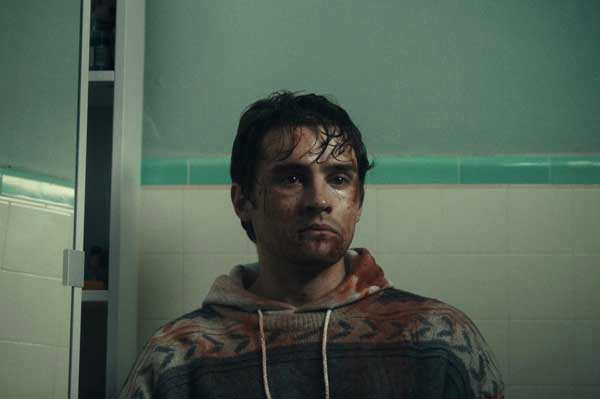
All Photos Courtesy of Focus Featues
OBSESSION
by Justin Tanner
Back when I was in drama school, instructors had a word for actors who tried too hard to communicate every emotion. They called it ‘indicating.’ Things like rubbing your stomach to show you're hungry or wrapping your arms around yourself and saying, "Brrr!" to show you're cold. Beginning actors often fall into these habits because they're still learning to trust that an audience will meet them halfway. They think they won't be understood unless they empty a shotgun into the audience's face. You rarely see this in professional films because directors usually recognize it long before the cameras start rolling. Apparently Curry Barker missed that class. It takes less than a minute for "Obsession" to reveal the consequences.
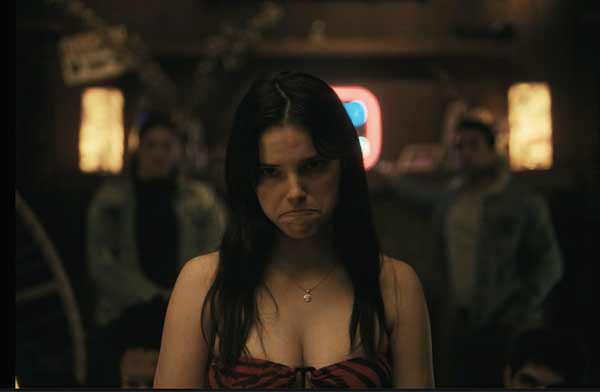
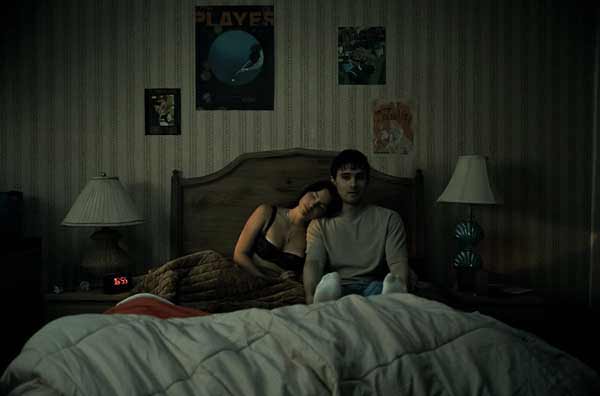
In the opening shot, Bear (Michael Johnston), a handsome twentysomething in a beige sweater, stares into the camera and delivers a confessional monologue — though it's difficult to concentrate on what he's saying because the performance is so aggressively mannered. Every line is freighted with studied pauses, furtive glances, hesitant smiles, and enough subtext to illuminate a football stadium. And things don't improve when Ian (Cooper Tomlinson) joins the conversation. Together they engage in the kind of casual bro chit-chat we've seen dozens of times before, only here it's been so thoroughly micromanaged that every sentence becomes a four-course meal. After five minutes we're already exhausted. After ten, we're so hungry for someone to simply say a line without spinning it into an aria that we begin to resent the film itself. At one point I closed my eyes and realized it all might actually work as animation. Remove the actors and replace them with talking woodland creatures, and suddenly every performance would make perfect sense. Then Inde Navarrette enters the chat, and with her goes any lingering hope that someone — anyone — might ground the film in recognizable human behavior. Navarrette, who plays Bear's co-worker Nikki, is so affected in her demeanor that she resembles a new mother trying to get her one-year-old's attention. Every gesture is outsized, every reaction performative. Each smile and line reading suggests someone already teetering on the edge, long before the screenplay calls for her unraveling. (In one hilarious scene at a bar, Bear orders a piña colada. Nikki responds, "I like a man who's in touch with his feminine side!" with such unnerving intensity that any reasonably well-adjusted person would finish their drink and head for the parking lot.) Nikki is Bear’s co-worker and the object of his obsession, though he’s never been brave enough to act on it. It's a dynamic the entire film depends on, yet Barker never gives it any psychological weight. Bear isn't merely shy; he's immobilized by a screenplay that needs him to be. There's no convincing reason he wouldn't simply ask Nikki to dinner. He’s handsome, she’s interested, done deal. Instead, the film steers him toward a magical wishing stick he discovers in a novelty store, setting off a Monkey's Paw nightmare that only exists because the screenplay refuses to let its protagonist behave like an actual person. Roger Ebert used to call stories like this "idiot plots": narratives whose conflicts would disappear instantly if the characters behaved like reasonably intelligent adults. That problem becomes impossible to ignore once Bear's wish that Nikki “love him more than anyone else in the world” comes true, transforming her into a homicidal maniac. If Navarrette began the film hinting at madness, Barker now has her abandon all restraint. The performance detonates into a relentless barrage of screaming, sobbing, flailing, and bodily humiliation so extreme it produces sympathetic flop sweat. We stop thinking about the character and become deeply concerned for Navarette herself. Acting this extreme can work. Isabelle Adjani's legendary turn in "Possession" remains one of the most fearless depictions of psychological collapse ever put on film. But that performance wasn't simply the product of Adjani's commitment. It was carefully modulated and given terrifying form by director Andrzej Żuławski. Barker, by contrast, seems content to mistake amplification for direction. Rather than sculpting Navarrette's performance into something operatic or disturbing, he just keeps pouring gasoline on it. From there the plot rolls toward us like a film riding down a conveyor belt. You can see every development from a mile away, leaving no chance to be even mildly surprised. Nikki grows increasingly violent while Bear cycles through a limited range of reactions: confusion, fear, resignation. Yet, as the danger escalates, he does almost nothing. More than once I found myself wondering, Why doesn't he go to the police? It's not as though Bear has committed some terrible crime that would prevent him from asking for help. There was no reason to believe the wishing stick would actually work, yet once Nikki spirals into homicidal obsession he simply accepts it. She cooks his cat and feeds it to him in a sandwich, seals the front door with layers of duct tape so he can't escape, and eventually murders one of his closest friends in front of him. Even then, calling the police never seems to occur to him. Curious whether I’d missed something, I posed a simple question in an online social film network: “Why doesn’t Bear call the cops?” More than a hundred people responded. Most were variations on “Because shut the fuck up.” Others argued he was too ashamed or too guilty to ask for help. Those are defensible readings, but they create a protagonist so morally compromised that it’s impossible to care whether he lives or dies. One response, however, struck me as brutally honest: "Because then the movie would only last ten minutes." Bingo. We're right back to Ebert's "idiot plot."
And yet... Films don't make nearly half a billion dollars worldwide by accident. Pauline Kael famously wrote, "Movies are so rarely great art that if we cannot appreciate great trash we have very little reason to be interested in them." I don't think "Obsession" qualifies as great trash — or even particularly good trash — but I do think its success says something worth paying attention to. Part of its appeal may be that it arrives at exactly the right cultural moment. We live in an increasingly unpredictable world, and Barker's film is the opposite of unpredictable. Like ordering the same steak at a restaurant you've trusted for years, you know exactly what you're getting, and that's precisely the point. I've also heard fans describe the central romance as oddly relatable. Not literally, one hopes, but emotionally. Most people remember a relationship where they didn't yet know where the line was between passion and possessiveness, devotion and control. "Obsession" inflates those youthful anxieties into grotesque fantasy. Then wraps them in a familiar, reassuring formula. That's ultimately where "Obsession" loses me. The performances, the writing, and the direction never cohere into something greater than their individual excesses. I wasn't repulsed in the way great exploitation cinema can be repulsive. I wasn't exhilarated. I wasn't transported. I was simply watching inexperienced filmmakers repeatedly mistake escalation for artistry. But the film matters. A $750,000 production that grosses nearly half a billion dollars doesn't merely become a hit — it becomes an event. Whether I admire it or not is almost beside the point. "Obsession" has exposed an appetite Hollywood either underestimated or ignored. Ironically, Barker's greatest weakness may also explain his greatest success. Just as he never trusts his actors to communicate emotion without underlining it, he never trusts his audience to discover anything for themselves. Every feeling is indicated. Every plot point is indicated. Every scare is indicated. For many viewers, that's not a flaw. It's exactly what they're paying for. STREAMING ON PEACOCK |
|
An LA-based playwright, JUSTIN TANNER has more than twenty produced plays to his credit, including Voice Lessons, Day Drinkers, Space Therapy, Wife Swappers, and Pot Mom, which received the PEN-West Award for Best Play. He has written for the TV shows Gilmore Girls, My So-Called Life and the short-lived Love Monkey. He wrote, directed and edited 88 episodes of the web series Ave 43, available on YouTube. Tanner is the current Playwright in Residence for the Rogue Machine Theatre in Hollywood, where his most recent play My Son the Playwright, of January of 2026, was met with rave reviews. Travis Michael Holder of the LA Drama Critics Circle wrote, "a phenomenal new achievement by local counter-culture hero Justin Tanner.”
|


To receive a free subscription to our Sunday Lounge! newsletter, Click Here
Have a suggestion? Send an email to the Editor, Click Here