





Filmmakers, Screenwriters, Performance, Reviews, Film Reviews, Streaming

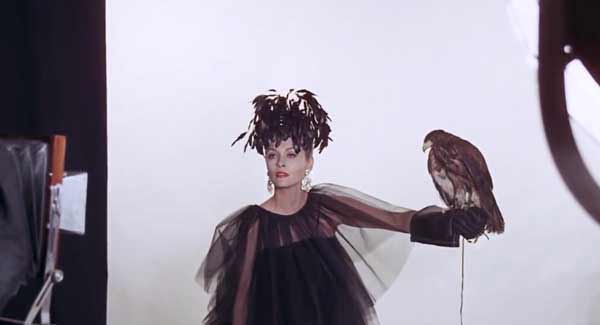
All Photos Courtesy of Universal Pictures
PUZZLE OF A DOWNFALL CHILD (1970)
by Justin Tanner
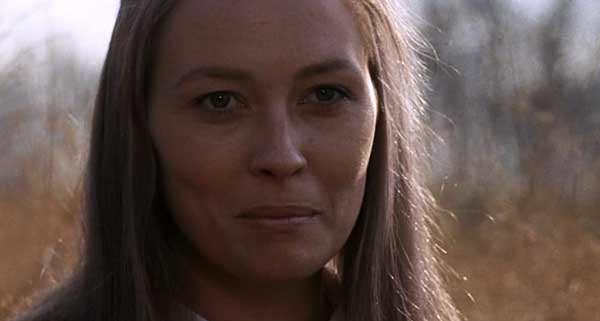
In fashion photographer Jerry Schatzberg’s debut feature, Faye Dunaway plays a former model living alone in a rustic beach cottage on Fire Island in the late 1960s. She's suffered a nervous breakdown, spent time in a psychiatric hospital — where it's implied she underwent electroshock therapy — and now exists among the faded relics of her former life. Her character, Lou Andreas Sand, is something of an enigma. A pale, dissociative woman who seems to fade toward transparency before our eyes. At the film's outset, Lou’s former lover and longtime friend, fashion photographer Aaron (Barry Primus), partially based on the director, arrives with a reel-to-reel tape recorder, hoping to interview Lou as the basis for a film about her life. What follows is a fractured chronicle, tracing Lou's transformation from the first blush of fame to the wan, emptied-out figure she's become.
This is peak Dunaway: raw, vulnerable, and miles removed from the cool, controlled authority of her later performances. There's a fragility and uncertainty that at times recalls Sandy Dennis, with her halting speech patterns and mercurial emotional rhythms. It's a performance as fascinating as it is remote. "Puzzle of a Downfall Child" belongs to a remarkable group of female-driven psychological dramas — "The Rain People," "Diary of a Mad Housewife," "Looking for Mr. Goodbar," — that emerged in the late 1960s and 70s, centered around women who refuse to behave according to conventional expectations. They drift, self-destruct, pursue sex on their own terms, and make choices that remain stubbornly resistant to easy moral judgment. Like Frank Perry's adaptation of Joan Didion's "Play It As It Lays" — and later, Woody Allen's "Annie Hall" — the film is non linear, but instead unfolds like a handful of scattered photographs. Time is fluid. There is no conventional narrative, only fragments that gradually coalesce into a life. From the very start, Lou’s behavior is unnerving. At her first modeling assignment, the photographer, Falco (a snarling Emerick Bronson) tells her she’s as sexy as a countertenor, calls her dress a shapeless, uninspiring rag, and finishes up with ”You know, you’ve got a pointy head.” All before handing her a live falcon that repeatedly swipes at the elaborate feathered hat she's been made to wear. Yet Lou simply absorbs the humiliation with an eerie calm, as though degradation were another part of the job. That passivity carries over into her relationships with men. In one flashback, when Aaron tentatively asks whether she's attracted to him, Lou seems irritated by his timidity, curtly replying "If a person wants something, he should just take it." Other memories suggest a lifetime of psychological and sexual exploitation: a relationship with a much older man when she was only fifteen, an affair with a priest while still in Catholic school, and a succession of anonymous encounters with men she meets in grubby bars.
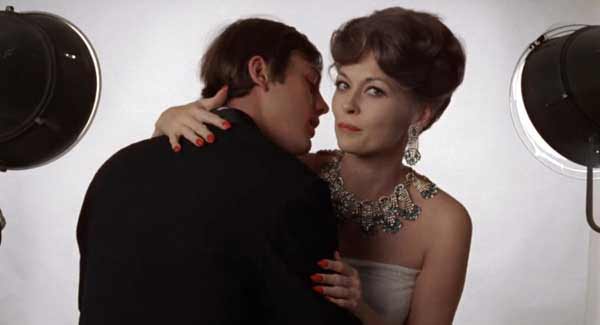
Then again, we're never quite sure how reliable she is as a narrator — her stories shift from moment to moment, leaving us uncertain where memory ends and fantasy begins. In one scene, Lou is followed home by a strange man who lingers across the street, staring into her window. Moments later, while talking to Aaron on the phone, she transforms the incident into something more alarming. "He's in my apartment right now!" she cries. "He thinks I'm a communist!" When Aaron gently questions the story, reminding her of her tendency to embellish events, Lou replies: "I did not lie. I just made it up." Though Lou often retreats into a kind of performative helplessness, every so often a sexual confidence asserts itself. During one photo shoot, the chemistry between her and a male model refuses to register for the camera. Lou halts the session, spirits him away to her dressing room, and, through a playful mix of teasing and alcohol, coaxes him out of his reserve. When they return to the set, the tension between them is suddenly electric. It's one of the few moments in the film where Lou appears completely in control, suggesting that performance — whether in front of a camera or in private — may be the only place she truly knows who she is. Yet at other times, Lou seems determined to diminish herself. While at the beach house, after Aaron has used the bathroom, she notices the toilet seat is down and asks "Who taught you to do that, your mother? I prefer putting the seat down myself." It's such an oddly revealing exchange. Lou seems almost uncomfortable with the idea of someone extending her even the smallest courtesy, as though consideration itself were something she hasn't earned. The strong supporting cast is led by Viveca Lindfors as a fashion photographer with her own private plane. Lindfors never became the star she deserved to be, but she's mesmerizing here. Like a Swedish-American Jeanne Moreau, she dominates every scene with little more than the unwavering intensity of her stare.
Roy Scheider also appears in an early role as Lou's jilted fiancé. His chilly indifference and sudden cruelty reinforce the film's suggestion that, for Lou, intimacy and punishment have become almost impossible to separate. Though The New York Times praised the film, saying “Miss Dunaway creates a character of such lovely, tentative lucidity that to be with her is worth a whole movie,” most of the contemporary critics panned it. Pauline Kael called it “bloodless and inbred” and Judith Crist wrote that “the film is as static and fatuous as a stack of flop issues of Vogue.” Time, however, has been kinder to Schatzberg's film. A wave of recent critical reappraisal has salvaged its reputation as one of the more intriguing and overlooked works of the American New Wave. And just last year, the Austin Film Society included it in its "Women of '70s Cinema" retrospective, introducing the long-neglected film to a new generation of viewers. Today, the film's fractured structure and emotional distance feel remarkably contemporary. Schatzberg's elliptical storytelling invites us to reconstruct Lou's life from scattered fragments, allowing each viewer to assemble a slightly different mosaic from the memories that resonate most deeply. For me, what lingers is Dunaway's astonishingly calibrated portrayal of Lou's psychological disintegration. By avoiding the snake-pit histrionics such a role might invite, she instead reveals an almost imperceptible dismantling of the natural defenses that allow us to function. By the end, Lou has become as helpless and exposed as a newborn. AVAILABLE TO STREAM ON YOUTUBE |
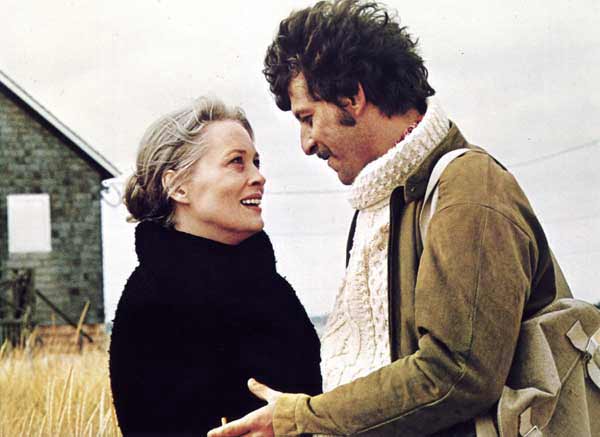
|
An LA-based playwright, JUSTIN TANNER has more than twenty produced plays to his credit, including Voice Lessons, Day Drinkers, Space Therapy, Wife Swappers, and Pot Mom, which received the PEN-West Award for Best Play. He has written for the TV shows Gilmore Girls, My So-Called Life and the short-lived Love Monkey. He wrote, directed and edited 88 episodes of the web series Ave 43, available on YouTube. Tanner is the current Playwright in Residence for the Rogue Machine Theatre in Hollywood, where his most recent play My Son the Playwright, of January of 2026, was met with rave reviews. Travis Michael Holder of the LA Drama Critics Circle wrote, "a phenomenal new achievement by local counter-culture hero Justin Tanner.”
|


To receive a free subscription to our Sunday Lounge! newsletter, Click Here
Have a suggestion? Send an email to the Editor, Click Here