





Filmmakers, Screenwriters, Performance, Reviews, Film Reviews, Streaming


All Photos Courtesy of Tribeca Films
REELING
by Justin Tanner
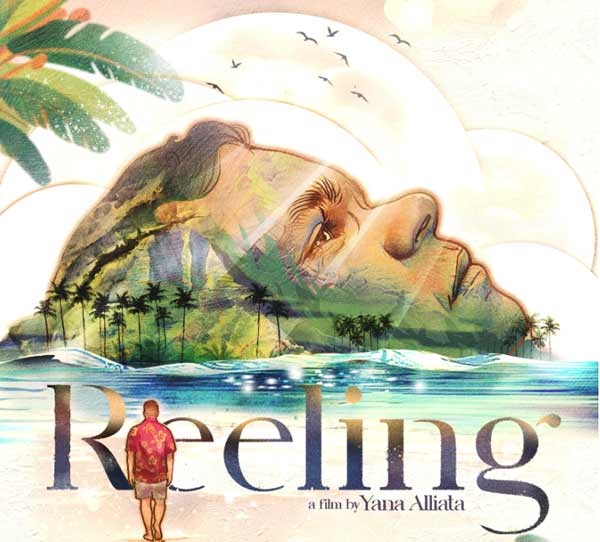
The opening shot of a lone figure in a bathing suit standing on a rocky bluff above the ocean is unforgettable. Rafael Leyva photographs the craggy landscape with a severe beauty, setting the permanence of the rocks against the restless churn of the waves. The image stands apart from the rest of the narrative. It could be a memory, a premonition, or simply a moment untethered from time. Whatever it is, it lingers over everything that follows, like a shadow, or a ghost. Yana Alliata's debut feature, "Reeling," takes place during a family gathering that's half birthday party, half celebration of life; the kind of occasion where everyone arrives hoping for connection while preparing for disaster.
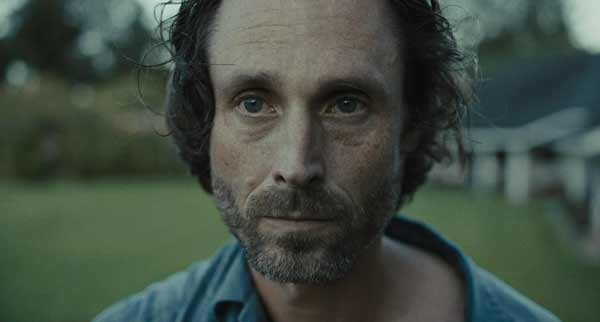
Like Trey Edward Shults' extraordinary "Krisha," which traps us inside an exiled alcoholic's disastrous Thanksgiving reunion, "Reeling" unfolds from the perspective of a family member who arrives carrying far more emotional baggage than anyone else is ready to confront. From the moment Ryan (Ryan Wuestewald) arrives at the family home on a beautifully remote stretch of Oahu, an almost imperceptible tension hangs over every interaction. Even moments of affection carry a hint of withdrawal, as though everyone is bracing for something to go wrong. And boy, does it. Almost immediately, Ryan, a slightly befuddled man in his thirties with an ugly scar running from his eyebrow over the top of his head, struggles to recognize people who clearly know him. At first it's merely awkward, with each introduction leaving him a little more frustrated. Then, after wandering through the kitchen opening every drawer and cupboard in search of a drinking glass — refusing all offers of help — he suddenly brings the party to a standstill by screaming, "Where are the fucking glasses?!" That's when Michael MacAllister's unsettling, percussive score crashes in, and whatever fragile peace existed evaporates.
Like Krisha's alcoholism, Ryan's condition, a traumatic brain injury from a devastating motorcycle accident, becomes the gravitational force around which every interaction revolves. After years spent unable to walk or communicate, this birthday celebration marks his first attempt to rejoin family life. No one knows quite how to behave, least of all Ryan. When he tries to help dig the pit for a backyard pig roast, his poor balance and lack of strength only make the job harder. Every attempt to steer him toward something else is met with resistance, as though some part of his brain simply can't let go of the task. Eventually his brother John (Hans Christopher) loses patience, snapping "Just go inside!" Ryan can't even pour a bag of ice into a cooler without the simple act becoming an ordeal. Watching him struggle to reclaim a life that once came naturally makes for a bruising experience. And Alliata never lets us look away, forcing us to sit through every agonizing beat. She's acutely aware of the subtle cruelties that emerge from even the most well-intentioned interactions: kindness tinged with pity, patience slowly eroded by exhaustion, and the impossible balancing act of loving someone while mourning the person they used to be. Thankfully, the breathtaking Hawaiian setting and the warmth of the gathering itself provide brief opportunities to come up for air before the next painful collision. In one of the film's loveliest moments, Ryan lets a gecko wander across his arm and neck. "Do I know you?" he asks. "You wanna be my friend?" It's the first time we see him completely relax. The gecko is the only thing that asks nothing of him.
Many of the scenes have the unforced quality of documentary footage, with improvised dialogue and behavior that seem to unfold rather than announce their dramatic purpose. At other times, Alliata's camera drifts toward something more lyrical. A scene of three young girls scrambling through the branches of a tree has the loose, searching quality of Terrence Malick. Yet the film's most devastating sequence feels unlike anything else around it. So painfully awkward it's almost funny. In a 2025 podcast, Alliata revealed that the scene, in fact the whole movie, grew out of an uncomfortable encounter at a friend's birthday luau, where someone beside her behaved inappropriately during a sensitive moment — a "misfiring of neurons," as she described it. In the film, the incident unfolds during the family's celebration of life for their recently deceased father, transforming what should be a moment of collective mourning into something almost unbearable. Our allegiances shift from one character to another with startling speed until certainty becomes impossible. Ironically, the same loose naturalism that gives the film so much of its authenticity becomes a liability in the final act.
The climactic confrontation, in which Ryan’s memory of the accident finally starts to emerge, calls for dialogue with a sharper point of view, something capable of articulating the feelings that have been accumulating for the previous seventy-five minutes. Instead, the characters circle those emotions without ever quite reaching them. The scene feels truthful, but underwritten. Luckily, the film's final moments return us to where we began, transforming what first seemed mysterious into something deeply moving. Rather than offering the neat emotional release we expect from stories about recovery, Alliata asks a far more unsettling question: What if remembering isn't the same thing as healing? AVAILABLE TO RENT ON AMAZON PRIME |


|
An LA-based playwright, JUSTIN TANNER has more than twenty produced plays to his credit, including Voice Lessons, Day Drinkers, Space Therapy, Wife Swappers, and Pot Mom, which received the PEN-West Award for Best Play. He has written for the TV shows Gilmore Girls, My So-Called Life and the short-lived Love Monkey. He wrote, directed and edited 88 episodes of the web series Ave 43, available on YouTube. Tanner is the current Playwright in Residence for the Rogue Machine Theatre in Hollywood, where his most recent play My Son the Playwright, of January of 2026, was met with rave reviews. Travis Michael Holder of the LA Drama Critics Circle wrote, "a phenomenal new achievement by local counter-culture hero Justin Tanner.”
|


To receive a free subscription to our Sunday Lounge! newsletter, Click Here
Have a suggestion? Send an email to the Editor, Click Here