





Filmmakers, Screenwriters, Performance, Reviews, Film Reviews, Streaming

All Photos Courtesy of
THE DEVIL WEARS PRADA 2
by Justin Tanner
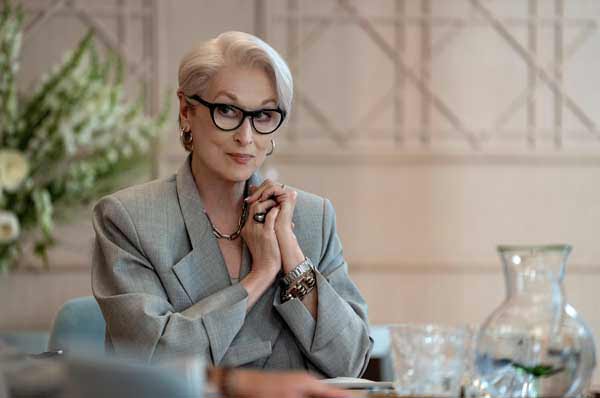
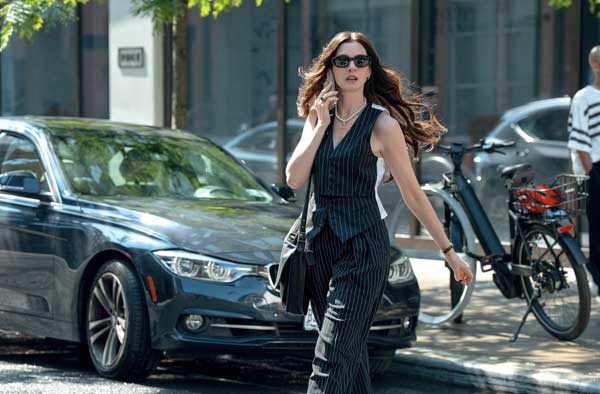
I almost never take notes while watching a movie. I prefer to sit with what I've seen before putting anything down on paper. First impressions can crowd out deeper ones. But five minutes into "The Devil Wears Prada 2,” and I was already reaching for my notebook, not usually a good sign. Which is a shame, because I loved the original film. Yes, poor Adrian Grenier was saddled with an unplayable role as Andy's drippy love interest. But on rewatches, I’d just fast-forward through those scenes. And everything else worked: the fish-out-of-water story, the marvelously cutthroat world of 'Runway' magazine, Anne Hathaway's sweet, awkward charm, and the razor-sharp wit of Meryl Streep and Emily Blunt. And, of course, the clothes. Especially that outfit. The one Andy wore after Nigel’s makeover: Chanel thigh-high boots, double-breasted jacket, gold chains and green Fendi bag. Even someone like me, who couldn't care less about haute couture, sat up and took notice. But fashion isn't really why the movie works. It's the collision of odd-man-out comedy and Cinderella story; the idea that, with the right mentor, enough courage, and a fabulous new wardrobe, we can become the person we were always meant to be. And it's entirely possible that everyone involved in "The Devil Wears Prada 2” approached it with the best of intentions. Perhaps they genuinely believed there was another chapter in the lives of Andy, Miranda, Emily, and Nigel that simply had to be told, or that they had found a fresh angle on the fashion world. Yeah. No. Here’s the problem: By the end of the first film, Andy's story was complete. She’d gone from a dorky, naive, somewhat rudderless college student to a smart, savvy, career woman. How do we take Cinderella back to the ball? There are, of course, other journeys a character can go on: emotional, spiritual, intellectual, sexual. But those require curiosity and imagination — something the filmmakers forgot to bring to the table. Instead, they simply rewound the clock, dutifully replaying the greatest hits of the original without understanding why they worked. Here's the first note I scribbled to myself: “Clunk, clunk, clunk goes the plot.” The original film introduced its story effortlessly through character and conflict. When exposition is woven into behavior, we hardly notice it's there. Here, however, it arrives like bowling balls falling from the sky. The sequel wastes no time plunging both leads — Hathaway's Andy and Streep's Miranda — into career-ending crises, only to reveal, moments later, that each holds the key to the other's salvation. And no sooner have Andy and Miranda been shoved back together than a third crisis arrives, one that can only be resolved by — wait for it — Emily. Now, with every principal character mechanically repositioned exactly where the screenplay needs them, the stage is finally set for the story to begin. Only, it doesn't. Because something very strange has happened to our beloved characters over the intervening twenty years: Absolutely nothing. Andy, Miranda, and Emily haven't grown, or even subtly evolved since we last saw them. It's as though they've been suspended in amber for two decades, untouched by experience or history. If anything, there’s been some regression on Andy’s part. Or perhaps it’s just that all the flighty, untethered vagueness, which had a Jean Arthur-like appeal when she was twenty-two, is considerably less charming coming from a woman in her forties. Now, when Andy smiles blankly into space — as she does for most of the film — it reads like someone whose prescription needs adjusting or, worse, an actor patiently waiting for the director to tell her what happens next. Miranda, meanwhile, has been declawed by an HR representative who makes sure she doesn't say anything that might get her canceled. It’s a running gag that probably seemed funny five years ago, but now it’s painfully dated. Worse, it robs Miranda of the very quality that made her such a delicious character in the first place.
The writers occasionally allow for a flash of her old venom, but the insults rarely land. When Miranda objects to the way Andy walks through the office, she remarks: MIRANDA: "You should get that looked at." Groan. And the screenplay keeps confusing setups with punchlines. Watching Miranda Priestly navigate a cafeteria or fly economy should be comic gold. Instead, the movie seems to think merely placing her in those situations is the joke, never bothering to develop them into something memorable. Miranda sitting next to a man eating a hoagie is about as far as the comedy goes. Blunt's Emily fares the best, largely because she seems to be the only returning cast member who showed up ready to play. While Hathaway and Streep look oddly disengaged (and Stanley Tucci, as Nigel, positively exhausted), Blunt still attacks every scene with blasé sarcasm and impeccable timing. Even saddled with weak material, she remains the one performer capable of generating laughs through sheer force of personality. Of the newcomers, Patrick Brammall, as Andy's love interest Peter, fares best. In fact, the moment he appears — some forty minutes into the film — his natural charisma and openness ground the story in reality for the first time. Until then, the screenplay has been racing from one plot point to the next, mistaking information for drama. But when Peter and Andy begin flirting at an open house, the movie finally pauses long enough to let two people simply talk to one another. It's only a few minutes, but suddenly we can breathe. The screenplay stops pitching story and starts observing behavior. Every time Brammall returns, the film regains a little of that lost humanity. B.J. Novak, on the other hand, is utterly at sea as Jay, the son of Miranda's boss and the film's nominal villain. Whether he's miscast or simply defeated by the writing, the character — a dim-witted heir thrust into power — feels as though he's wandered in from a mediocre '90s sitcom. And the usually reliable Justin Theroux leans so hard into his role as a kooky tech billionaire that he throws the film off balance. He's clearly having the time of his life, but it looks as though he's trying to amuse himself rather than the audience. The plot of “The Devil Wears Prada 2” couldn't be more basic: When Irv Ravitz, chairman of ‘Runway,’ unexpectedly dies, the future of the magazine is suddenly up for grabs. And that's it. The screenplay tries to manufacture suspense by sending Andy off on secret missions that ultimately lead nowhere interesting, but the truth is, we don't really care who winds up running ‘Runway’. If the film were working, we'd be having so much fun getting reacquainted with our old pals that the corporate maneuvering would scarcely matter. But director David Frankel and screenwriter Aline Brosh McKenna have misunderstood the assignment. They think we're here for boardroom intrigue and surprise reveals. We’re not. We want Andy, Miranda, and Emily to spar, stumble, reconnect, and occasionally wound one another while wearing fabulous clothes.
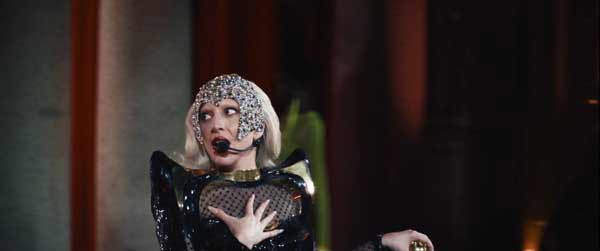
Of course, there are fashions, and lots of them. In one montage sequence — because what would a "Prada" movie be without at least one bouncy, needle-drop montage? — Andy and Miranda cycle through what feels like fifteen different outfits. Even Lady Gaga turns up looking spectacular to perform a song that sounds suspiciously like "Abracadabra" but is apparently called "Shape of a Woman." (We need a mash-up. Stat.) But the world has changed since 2006, whether the filmmakers realize it or not. Hearing Emily gush excitedly about grooming young women to covet $3,000 handbags as markers of identity, even with a token objection from Andy, lands with an audible thud. The original film understood that fashion was merely the vehicle for a story about reinvention and the courage to pursue your dreams. In the sequel it becomes the destination, mistaking luxury for meaning. By losing sight of what made Andy's journey so relatable — the thrill of an outsider finding her place in an intimidating world — the sequel forgets to invite us to the party. Instead, we're left standing outside the velvet rope, reluctantly admiring beautiful clothes we'll never own. STREAMING ON HULU |
|
An LA-based playwright, JUSTIN TANNER has more than twenty produced plays to his credit, including Voice Lessons, Day Drinkers, Space Therapy, Wife Swappers, and Pot Mom, which received the PEN-West Award for Best Play. He has written for the TV shows Gilmore Girls, My So-Called Life and the short-lived Love Monkey. He wrote, directed and edited 88 episodes of the web series Ave 43, available on YouTube. Tanner is the current Playwright in Residence for the Rogue Machine Theatre in Hollywood, where his most recent play My Son the Playwright, of January of 2026, was met with rave reviews. Travis Michael Holder of the LA Drama Critics Circle wrote, "a phenomenal new achievement by local counter-culture hero Justin Tanner.”
|


To receive a free subscription to our Sunday Lounge! newsletter, Click Here
Have a suggestion? Send an email to the Editor, Click Here