




Filmmakers, Screenwriters, Performance, Reviews, Film Reviews, Streaming

All Photos Courtesy of Warner Brothers
THE DEVILS
by Justin Tanner
When I was in my twenties, I had a boyfriend who liked to show me disturbing movies just to see how I'd react. On vacation in San Francisco, he dragged me to a revival screening of “I Spit on Your Grave” at a genuine grindhouse cinema in the Tenderloin. The floors were sticky, cigarette and pot smoke filled the air, and the movie itself, about a violent rape and an even more violent revenge, was shown in a scratched and degraded print. I was thoroughly nauseated by the experience, but not wanting to appear squeamish — I was in love, after all — I hid my disgust and reacted with enthusiasm. Which sadly led to more screenings of '70s extreme cinema, including Pasolini's “Salò,” Kubrick's “A Clockwork Orange” and, most upsetting to me, Ken Russell's “The Devils.” For decades afterward, I avoided movies I'd heard were particularly disturbing or violent. Certain images, especially scenes of physical torture or psychological cruelty, stayed in my head longer than I wanted. Even just hearing about them could send me into a feedback loop of dread that took days to shake.
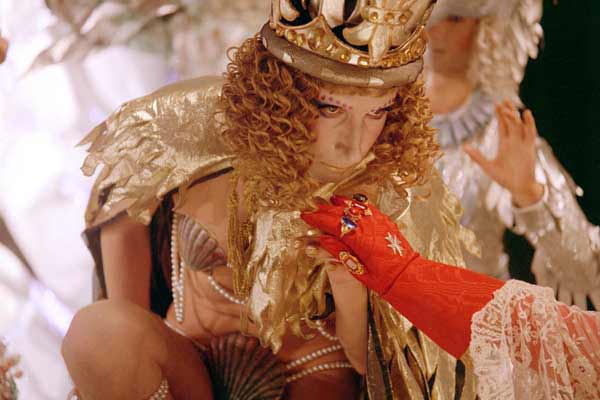
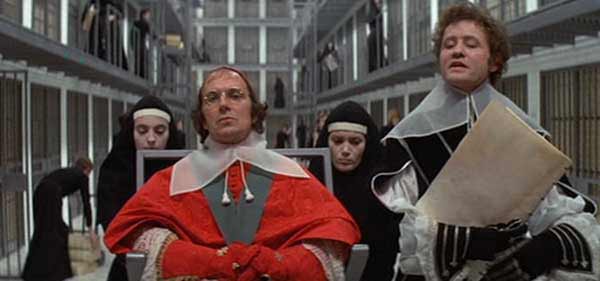
But once I started reviewing movies, I realized I'd have to get over this problem or find another line of work. So, starting with Ti West's “X” in 2022, I waded back into the grimy waters of horror and sleaze and discovered, to my surprise, that I'd become almost impervious to it. I still didn't enjoy watching people get tied up and stuck with knives, but the images no longer wounded me. Or so I thought. After watching the newly restored version of Russell's “The Devils” this week, I sat in stunned silence until the credits had finished and the theater lights came up. I wondered if perhaps it wasn't me who had changed. It was the movies. From its first frame, “The Devils” invites us into a marvelously specific world, where camp, horror and religious fervor coexist in a tone that is unmistakably Russell's. After a title card reminds us that the film is based on historical fact, we're presented with a theatrical proscenium where blue vaudeville waves glide back and forth as a giant clamshell rises from the stage floor. Inside is an almost naked man with golden ringlets: King Louis XIII, who is crowned and caped before performing a ridiculous ballet and tossing gold coins to his subjects, the very image of a benevolent God. Watching from the audience, dressed in devilish scarlet, is Cardinal Richelieu, surrounded by courtiers in bedraggled wigs and fading powder, looking like chipped porcelain dolls. The spectacle borders on camp, but something more sinister is afoot. After congratulating the king, Richelieu declares, “I pray that I may assist you in the birth of a new France, where church and state are one.”
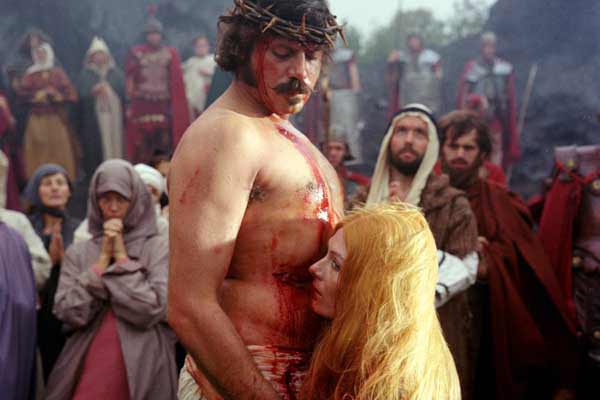
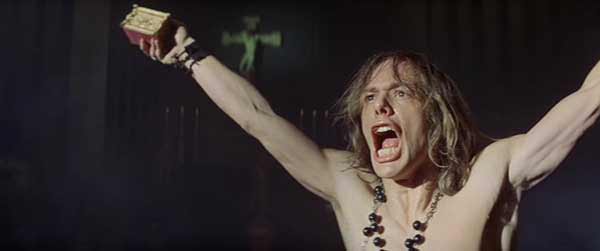
Cue the title sequence and Peter Maxwell Davies' unsettling score, a cacophony of instruments rubbing against one another like the moans of the damned. From here, the film takes us to the grubby, plague-ridden town of Loudun, where Father Grandier (Oliver Reed) assures a crowd gathered in the town square that “The religious wars are over. Catholic no longer fights with Protestant,” a statement the film will go to great lengths to disprove. Charismatic, vain and sexually rapacious, Grandier has become the town's de facto ruler following the governor's death from the plague, openly defying Cardinal Richelieu's efforts to tear down Loudun's walls and strip the town of its autonomy. Based on John Whiting's 1961 play and Aldous Huxley's 1952 book “The Devils of Loudun,” both inspired by actual events in 17th-century France, Russell's film recounts an outbreak of alleged demonic possession at Loudun's Ursuline convent. When the mother superior and several of her nuns accuse Grandier of sending demons to possess them, Richelieu seizes the opportunity to rid himself of his troublesome opponent. Reed gives perhaps the finest performance of his career, relishing the familiar role of bad-boy hedonist while gradually revealing a capacity for compassion. He moves from arrogance to vulnerability, sensuality to contrition, with remarkable ease. Even more unexpected is the defiant serenity he projects as Grandier faces martyrdom in the third act. When he's tortured by Father Barre, Richelieu's fanatical exorcist (a possessed Michael Gothard, sporting purple-tinted John Lennon glasses and Mick Jagger hair), Reed's reactions are so visceral we can barely watch, though Russell never shows the hammer land. A less assured director might have given us every gruesome detail. But Russell takes us right to the brink and then, for the most part, leaves the rest to our imagination.
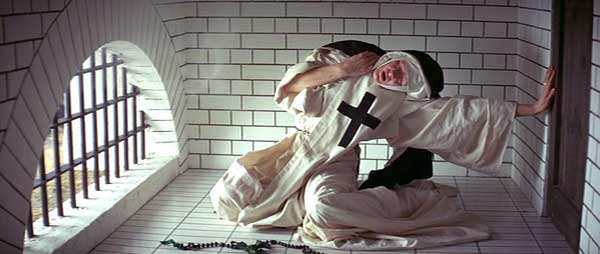
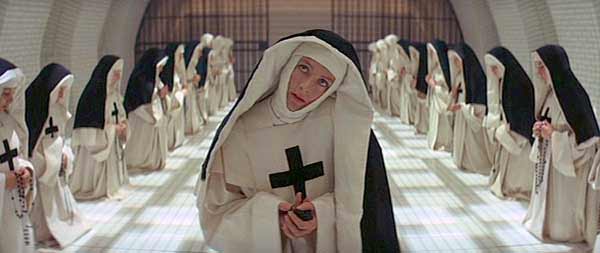
For all its baroque excess, “The Devils” never loses sight of the human suffering beneath the spectacle. Vanessa Redgrave's performance as Sister Jeanne, the hunchbacked mother superior whose secret desire for Grandier drives her to madness, is both grotesquely funny and unexpectedly heartbreaking. In Russell's original script, Sister Jeanne is described as having a “slightly humped back.” But Redgrave turns her affliction into a tour de force of physical expression. With the posture of a broken mannequin, her ear pressed down to her shoulder, she literally looks at the world sideways. By employing the naughty giggle of a precocious child, Redgrave is able to bring moments of dark comedy to Jeanne's longing, jealousy and shame. In her vivid fantasies, which typically feature a Christlike Grandier as her lover, Jeanne's hump disappears, and she stands tall and beautiful. Then jeering laughter intrudes, her posture collapses, and she's returned, heartbroken, to her former state. At one point, she explains to a prospective novice that most of the nuns are there because “there was not enough money at home to provide them with dowries, or they were unmarriageable because ugly and a burden to the family.” Suddenly, the nuns' increasingly obscene behavior takes on a terrible poignancy. These are women who have spent their lives being told they were unwanted. The supporting cast is equally impressive. Georgina Hale is deliciously vulgar as Grandier's latest conquest, Philippe, whom he abruptly discards after sex: Philippe: I'm pregnant. And Graham Armitage brings a louche decadence to Louis XIII, whether he's shooting Protestants dressed as birds (and snarking “Bye, Bye, Blackbird”) or tricking Sister Jeanne into believing she's been cured by a vial containing Christ's blood, only to reveal that it's empty. Through it all, Armitage remains serenely above the squalor, untouched by the suffering he causes.
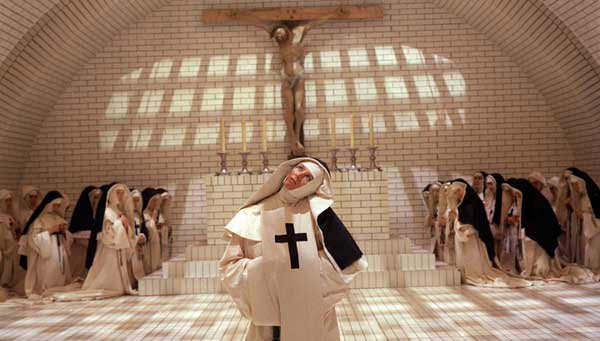
Derek Jarman's massive, largely white sets evoke a strange futurism inspired by Fritz Lang's “Metropolis,” yet somehow feel authentic to the period. Against this stark backdrop, Shirley Russell's costumes blend 17th-century fashion with avant-garde flourishes. The stylized design keeps us at a distance, while the intimacy of the performances draws us agonizingly close. It's a tightrope walk, but Russell seems perfectly at home with these contradictions, shifting between naturalism and abstraction, comedy and horror, until we're never quite sure what might come next. Nowhere is that balancing act more precarious than in the film's most notorious scene. Before Russell could submit his original cut of “The Devils” to the British Board of Film Censors, Warner Bros. executives insisted he remove a four-minute sequence known as “The Rape of Christ.” In it, the nuns, whipped into a frenzy during a public exorcism, strip naked, pull a life-sized effigy of the crucified Christ from the wall and proceed to defile it in every imaginable way.
Now restored to the film, the sequence makes Warner Bros.' alarm understandable. Russell doesn't hold back. The scene plays almost like a Benny Hill sketch, with lolling tongues, romping nuns, gymnastic twirls, and the feverish grinding of body parts on the representation of God, all accompanied by the agonized shrieks of Davies' percussive score. But the orgy of blasphemy is only part of it. Russell intercuts the nuns' desecration with Grandier undergoing a profound spiritual transformation, breaking bread and reaffirming his faith. What initially appears to be an exercise in outrageous provocation becomes a confrontation between the spectacle of religion and the experience of genuine belief. By cutting the four-minute sequence, Warner Bros. didn't simply remove something objectionable. It robbed Grandier of perhaps the most important moment in his transformation. Without it, we're left wondering how the swaggering womanizer became a penitent man. Ultimately, what disturbed me most about “The Devils” wasn't its blasphemy or its violence, but the ease with which religious hysteria could be manufactured and turned into a weapon of the state. Russell made the film more than fifty years ago, yet its portrait of political opportunism and public cruelty feels disturbingly familiar.
The film's final stretch, with its lingering images of death and madness, is not easy to watch. Yet Russell counters the despair by investing the suffering with meaning and purpose. We're left not just disturbed but strangely exhilarated, with a closing image that suggests the possibility of renewal amid the ruins. IN THEATERS |
|
An LA-based playwright, JUSTIN TANNER has more than twenty produced plays to his credit, including Voice Lessons, Day Drinkers, Space Therapy, Wife Swappers, and Pot Mom, which received the PEN-West Award for Best Play. He has written for the TV shows Gilmore Girls, My So-Called Life and the short-lived Love Monkey. He wrote, directed and edited 88 episodes of the web series Ave 43, available on YouTube. Tanner is the current Playwright in Residence for the Rogue Machine Theatre in Hollywood, where his most recent play My Son the Playwright, of January of 2026, was met with rave reviews. Travis Michael Holder of the LA Drama Critics Circle wrote, "a phenomenal new achievement by local counter-culture hero Justin Tanner.”
|


To receive a free subscription to our Sunday Lounge! newsletter, Click Here
Have a suggestion? Send an email to the Editor, Click Here