





Filmmakers, Screenwriters, Performance, Reviews, Film Reviews, Streaming

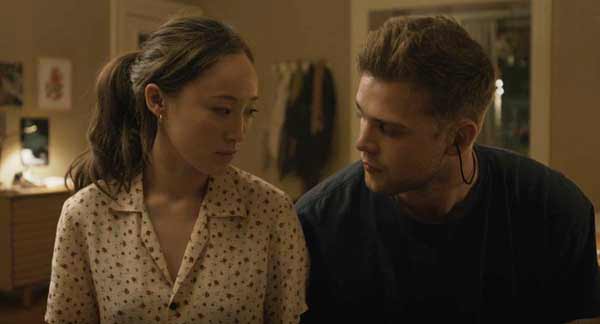
All Photos Courtesy of Black Bear Pictures
TUNER
by Justin Tanner
I first realized something was wrong with my hearing in 1997. I’d gone to the Vista Theater in Los Feliz for the “Star Wars Special Edition” rerelease, grabbed some popcorn and hunkered down for a night of peak ’70s sci-fi nostalgia. Before then, I used to love the THX Deep Note trailer; I always hoped that whatever theater I was in would crank it to the max so I could feel that visceral dopamine rush. But that night, when the trailer started, I felt a slight pain in my head, one that intensified as the sound built toward the higher-pitched hum at the end. I reflexively shoved my fingers in my ears until the movie started. But the pain continued. Even after cramming napkins inside, I could barely sit still. Everything hurt: the dialogue, the music, the explosions. After ten minutes, I left. Since then, I haven’t been able to attend movies or concerts, or even go to the gym, without wearing earplugs. All this is to explain why director Daniel Roher’s neo-noir romance “Tuner” resonated with me so deeply.
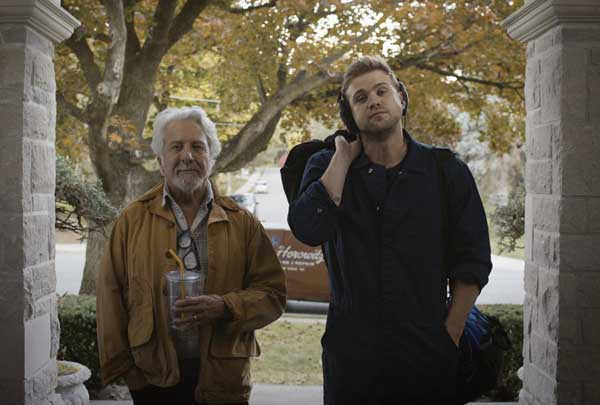
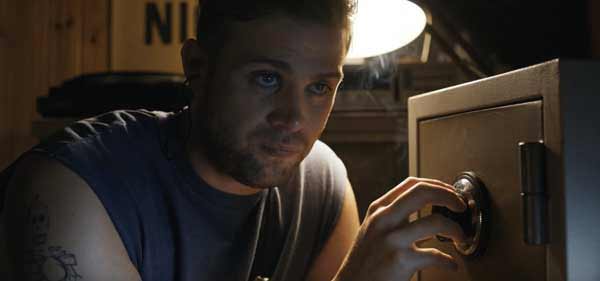
In it, Niki (Leo Woodall), a young man with severe hyperacusis — a hearing disorder in which normal, everyday sounds become extremely painful — is a piano tuner, a job particularly suited to his acute sensitivity. Niki has to wear specialized earplugs and noise-canceling headphones just to navigate the world at large, but when he’s sitting at a piano, listening to notes, matching frequencies and making tiny adjustments to string tension with a tuning hammer, he is an absolute master. Though he had to give up his career as a piano prodigy, Niki has found the one place where his disability becomes an advantage, turning an aspect of his disorder into something approaching a superpower. Roher’s direction nimbly draws us into the specialized world of piano tuning, a craft I had no idea could be so intricate or absorbing. In a scene where Niki repairs a water-damaged grand, he removes each individual hammer from the keyboard and lays them across the floor like pieces of a giant jigsaw puzzle. Suddenly, an instrument I took for granted revealed itself as an impossibly complicated machine and I could’ve happily spent an entire film just exploring this unique world. But when his mentor Harry (a gently befuddled Dustin Hoffman) forgets the combination to his safe, Niki realizes that the same finely calibrated hearing that makes him such a good piano tuner also makes him a remarkably effective safecracker. The discovery sends Niki — and the film — in an entirely new direction, one promising both financial reward and genuine danger. From this point, “Tuner” follows the predictable steps of the genre without adding a single new move: Niki falls in with a bad crowd, gets pulled deeper into a life of crime than he wants, meets a romantic interest who makes him question his path, faces a moral crisis and eventually emerges a changed man. Roher follows the schematic so precisely you can practically time the story beats to the second. And yet. Leo Woodall’s Niki is such good company, brilliant and precise when putting his prodigious talents to work, then heartbreakingly vulnerable when confronted with his own personal kryptonite: any loud sound.
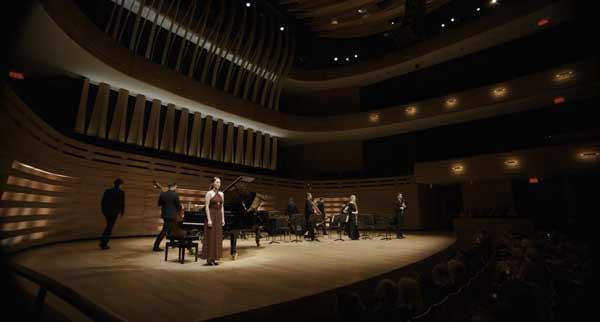
The romance really works, too. Havana Rose Liu, who was so marvelously chilly as Shai, the diplomatic manager in “Lurker,” warms up nicely as Ruthie, a modern classical composer Niki meets while tuning a piano at the conservatory where she studies. Though their trajectory is pure by-the-numbers meet-cute (with complications), the two have real chemistry, and when the road gets bumpy, we genuinely fear what losing Ruthie might do to Niki. The acting across the board is fine. Hoffman is strong and refreshingly low-key, while Tovah Feldshuh lends her usual steely warmth as Harry’s wife and Niki’s moral arbiter. Things are dicier with the three villains, Uri (Lior Raz), Yoni (Gil Cohen) and Benny (Nissan Sakira), though the performances are sharp and they manage to create a believable “family” of professional thieves. The problem is what the plot eventually requires them to become. To generate the tension needed for the action beats, these men, who initially exude a rough-hewn charm, have to transform into horrific sadists. Uri, in particular, tortures Niki with an air horn not once, but twice. Perhaps to the average viewer this might not seem especially egregious. But for me, watching Niki scream and writhe in agony while a former friend blasts an air horn directly into his ear was so far beyond the pale that I temporarily checked out of the film. A bigger problem is the third act pile-up of ridiculous plot coincidences that turn “Tuner” into an exercise in strained credulity and cause trusted characters — Nikki especially — to start acting in ways that simply don’t make sense. After listening to Ruthie play a new composition on the piano, for instance, he inexplicably trashes it and her, purposely attacking the only person in the film he can trust. It makes no sense, but the plot needs the lovers to fight, so they fight. The music itself is another issue. Ruthie spends much of the film composing, and since she eventually wins a prestigious competition, we’re clearly meant to take her work seriously. The trouble is, her music sounds like the unlikely offspring of a TV jingle and a campfire song arranged for woodwinds. When a famous composer praises her orchestrations and hires her on the spot, I briefly wondered if I’d missed the joke. Thankfully, “Tuner” recovers with an ending that works emotionally, if not entirely literally, and almost makes us forget the missteps of the previous half hour. Like the closing moments of “The Invite,” it comes down to two people sitting at a piano, sharing the simple pleasure of making music. I’m a sucker for that kind of thing, and the scene got to me despite my better judgment. Whether the movie has entirely earned that response is another question.
What it has earned, however, is my admiration for Leo Woodall. Effortlessly magnetic and vulnerable, Woodall holds the center of the film together even as the plot collapses all around him. By the end, I may have stopped believing in “Tuner” as a film, but I never stopped believing in Woodall as a star. AVAILABLE FOR RENT ON AMAZON PRIME |
|
An LA-based playwright, JUSTIN TANNER has more than twenty produced plays to his credit, including Voice Lessons, Day Drinkers, Space Therapy, Wife Swappers, and Pot Mom, which received the PEN-West Award for Best Play. He has written for the TV shows Gilmore Girls, My So-Called Life and the short-lived Love Monkey. He wrote, directed and edited 88 episodes of the web series Ave 43, available on YouTube. Tanner is the current Playwright in Residence for the Rogue Machine Theatre in Hollywood, where his most recent play My Son the Playwright, of January of 2026, was met with rave reviews. Travis Michael Holder of the LA Drama Critics Circle wrote, "a phenomenal new achievement by local counter-culture hero Justin Tanner.”
|


To receive a free subscription to our Sunday Lounge! newsletter, Click Here
Have a suggestion? Send an email to the Editor, Click Here