|
| Back to Main Page |
 |
 |
 |
|||
A Beautiful Deep Dive Into Our Worldwide Arts + Culture |
|||||
Sundance 2026 Review |
|
||
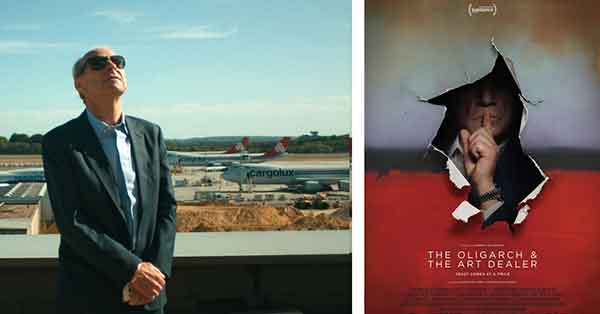
by Rich Henrich At Sundance, where moral certainty is often served with a side of self-congratulation, the new art world documentary series "The Oligarch and the Art Dealer" arrives like a cold splash of mineral water to the face. It doesn’t shout. It doesn’t posture. It observes—and in that restraint, it indicts an entire ecosystem of power, taste, and money laundering disguised as culture. The pilot episode of this limited series, which was one of only two selected to Premiere at Sundance this final year in Park City, is less a whodunit than a slow-burn autopsy of proximity: how art, in the hands of the ultra-wealthy, becomes not a mirror to society but a firewall against consequence. Through elegant pacing and unnervingly calm interviews, the documentary traces the relationship between obscene capital and aesthetic legitimacy, revealing how art dealers function, less as tastemakers, and more as soft-spoken engineers of reputational laundering.
What’s most unsettling is the tone. There is no dramatic score begging you to feel outrage, no editorial voiceover insisting on your anger. Instead, the episode trusts the audience to connect the dots—between offshore accounts and white-glove galleries, between war-adjacent wealth and champagne-soaked openings. The effect is far more damning. By the time the credits roll, you realize the inquiry hasn’t accused anyone outright; it has simply shown us how the game is played, and how willingly institutions participate. Visually, the style is immaculate—museum-clean compositions that echo the sterile beauty of the spaces it critiques. This is intentional. The camera lingers just long enough on polished surfaces, luxury interiors, and casual conversations to let the rot seep through the frame. It’s a documentary that understands irony as a visual language. Premiering at Sundance feels almost mischievous. This is a festival deeply entwined with prestige, patronage, and high-net-worth influence, and "The Oligarch and the Art Dealer" quietly asks whether any cultural institution—no matter how progressive its branding—can truly claim innocence. The question hangs in the air long after the lights come up. This is not the hyped-culture play that tends to trend on social media. It doesn’t hand you a villain you can boo and forget. Instead, it leaves you with a more dangerous discomfort: the realization that culture itself may be the most effective laundering mechanism of all.
Rich Henrich is an Emmy & Telly Award–winning film producer and cultural strategist writing at the crossroads of art, place, and power. His work tracks contemporary Americana, independent film, and visual culture across the American West and Southwest. He’s interested in how stories shape markets—and what gets lost in the spaces where culture, commerce, and mythology quietly collide.
|