


A Beautiful Deep Dive Into Our Worldwide Arts + Culture
| Back to Main Page |
|
|
|
|||
A Beautiful Deep Dive Into Our Worldwide Arts + Culture |
|||||
|
|
|||
VEGAS, MODERNITY, and THE ARTS Scott Dickensheets Interviews Isaac Ariail Reed
Note: This text began as a transcript of an interview conducted for Desert Companion on KNPR. It has been edited, augmented, and extended in several places. Click Here.
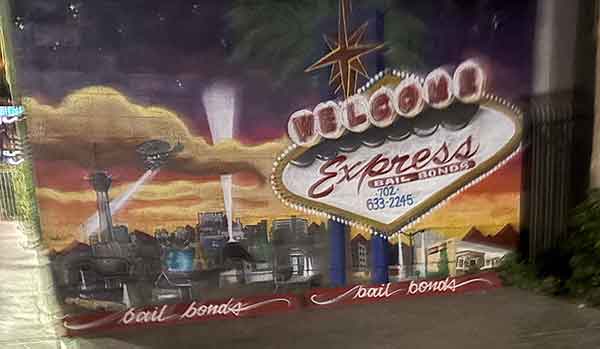
Scott Dickensheets: Isaac, thanks for being here. Isaac Ariail Reed: Thanks for having me. SD: So, you’re a professor of sociology at the University of Virginia, you occupy a chair in Political and Social Thought, and you’re a senior fellow at the Institute for Advanced Studies in Culture. IAR: That’s all true, yes SD: What brings you to our modest little town? IAR: Well, I’m very interested in Las Vegas. I’m trying to write a book about it, possibly two books about it. I’m trained in historical sociology, which is this weird little subfield of sociology where you ask questions about the major transformations in human life over the last 500 years. I think there’s something in Las Vegas that is a culmination of some of those transformations. Vegas is a very intense and interesting place for a variety of reasons, and not the usual ones it is known for–partying, tourism, gambling–but related to those stereotypical reasons in a complex way. Somewhere in there is a new way to tell the story of the modern world… by looking at the history of Las Vegas. SD: There’s only 100-and-some-odd years of history here…how much can there be to work with? IAR: Agreed. But for me, that’s part of what’s interesting…there’s something accelerated about Las Vegas history, things going up and things going down. But perhaps I could also say that Las Vegas is the culmination of certain processes–psychic, social, political, economic that began long ago and in other places. We live in the modern age, or the postmodern age, or whatever you want to call it–we live in a world made by the last 500 years of power and human struggle. And there is, I suspect, some deep way in which the modern condition changed the human condition–it is not an accident that modern art is different from what came before it. In Vegas, it is possible that certain aspects of this great modulation of what it feels like to be human culminated. For example, Vegas puts the body at stake in a way that is both particular to Vegas’s history–of sex work, of performance, of criminality and violence–but also expresses, or is somehow an avatar of, what the whole world has been doing for 500 years. This is why I wanted to study the archives over at UNLV, and learn more, on the ground, about how people think about architecture in this town. For me, Las Vegas is a good place to study as Vegas with all of its particularities, but also a good place from which to study the rest of the world SD: What sort of vantage point on the world does Vegas offer you? IAR: I would say that Vegas puts some things at stake, in a very clear and concrete way, that are abstract and under the surface elsewhere. SD: For example… IAR: So, for example, wild changes in architecture right next to each other. I am an outsider to architectural theory itself, but it does strike me that, well beyond the famous book Learning from Las Vegas, this town puts the question very starkly: what is design, really? When we say that a layout of a new development is coherent, what does that actually indicate? And, when we build something to be solid, what kind of commitment are we actually making? Because in Vegas, there is a wild bricolage of buildings, some of which will be destroyed in well less than a generation. There are weird chances that do not work out. Look at the ceiling of the Fontainebleau; amazing; yet will it work? And yet I would also argue, as Dave Hickey once did, that a lot of what goes on in Las Vegas can also be found in every other place; it's just that Vegas brings it out in an intense and concrete way. There is also something at stake in what goes on the ceiling of city hall my hometown of Durham, and something at stake in how the walking mall is designed in Boulder, Colorado or Charlottesville, Virginia. Yet it is Las Vegas that really shows us both what is possible in modernity–good and bad–and how quickly very solid things can be dynamited, literally or metaphorically. But leave the architecture and return to the body for a moment (though of course the two are related). The entire modern age is a series of experiments with the human body; extraordinary developments in medicine, horrible experiences of sorting bodies by phenotype, and so on. And every single living human being negotiates the experience of having a body in one way or another. (Artificial Intelligence less so.) When humans negotiate the unavoidable experience of embodiment–and the modern experiments with embodiment–they have experiences of constraint, of freedom, of pleasure, of pain. And yet this happens in Las Vegas in a way that just pushes it in your face and says: pay attention, because this is the world all you moderns live in, wherever you are, whether you like it or not. SD: Does Las Vegas, you know, subvert or redirect…you know…the common ideas of what a city is, and can be? IAR: So that’s an interesting one–and the urban sociologists are perhaps the best ones to answer. Of course, it is less clear that sociologists as a whole are ready to answer that carefully. The last time sociologists came to town in a large group, the UNLV social theorist David R. Dickens had to write a whole essay in response to them called “Is Las Vegas a Real City?” So I feel like with Dickens’ excellent essay and with Hal Rothman’s work, we’ve at least put that one to bed—it’s definitely a real city. The question for Vegas as a city is, ‘what is it a prototype of,’ ‘what it is an archetype of,’ ‘what is it a stereotype of’? What kind of city is it, vis-à-vis other cities? And I think there we learn a lot: On the one hand, I think Vegas is a sunbelt city; we know that from Geoff Schumacher’s great book Sun, Sin, and Suburbia, and we can watch its development. On the other hand, there is something to be learned from the Strip, and from Learning from Las Vegas. For example, in social theory, we have a certain concept of a city as conducive to a poetic, intellectual flaneur who is a guy who walks around the city, maybe after having a couple beers, and then goes to write a poem or something like that. SD: mmhmm IAR: That version of the flaneur is an old European idea–though one held onto rather tightly by certain urban intellectuals on the eastern seaboard of the USA! Las Vegas shows you what it's like to be a flaneur in a car. It’s remarkable to notice that even though all the old—now I’m talking about the Strip, not the city as a whole, but the Strip—all of the old casinos that were built on the “Route 66 model” are gone…that the analysis that was done by Venturi and Scott-Brown and Izenour in Learning from Las Vegas still works. They have a rendering of what it’s like to drive up the Strip, as an aesthetic experience. This is revealing, perhaps in ways that have not been fully understood yet. So, even with the switch to the megaresorts, there is something about Las Vegas and the city of the car. Now some people would say, okay, well that’s the Los Angeles model. But I actually don’t think that's right, I think there’s something else going on in Las Vegas…which has to do with what a postindustrial city looks like? And here I really have to credit the historian Hal Rothman, who I mentioned before, and from whom I have learned so much. He called it the first 21st century city in the 20th century–the 21st century city. And that I think seems truer every year, I’m gonna say? SD: So unlike many writers who address the city from outside, you come here quite a bit, and you’ve been here talking to a lot of people. What’s the relationship between the views you have about the city, that you’re developing, and your experiences here…Cause you’ve done a lot of different things while you’re here; you’ve gone to performance art shows, you’ve gone to galleries, you've been talking to tons of people–what’s the relationship between your views and your on-the-ground-experience? IAR: I mean maybe I could just lead by saying that one of my favorite places to hang out is the Parlor bar at the El Cortez because I just seem to get better ideas there. And I have sort of driven all around the valley and things like that, trying to learn about the city. I guess the first thing I’d say is that I really do think that the arts scene here is just different from what I’ve experienced in LA and New York, and I've learned a lot from artists and writers here—even about how to read the archives I’m looking at, you know, documents they maybe don’t know about that are sitting over there in the UNLV archives; when I talk to them about those documents, they have their own ideas about what was at stake on the Strip, and so on. So, the first thing I'd say is that my experience moving through the city has often been that Las Vegans are very knowledgeable about the city and full of opinions and counter-opinions about it. Anthony Bondi has this remark in his book about how there’s not much monumental architecture in Las Vegas. There's civic architecture of course, and the libraries are especially nice, and all that, but there is this interesting thing…where… I wonder sometimes if the lack of monumental architecture and the lack of big things, like the Washington monument or, stuff that you’d find in New York or something, has caused it to be the case that the history and the memory of the city lives in the people who live here…in a distinctive way. I say this because I’ve just had several versions of a certain kind of encounter, both when interviewing artists and also just talking to people, and it goes like this: they can give you a pretty serious economic analysis of what’s happening with the casinos on the strip, and then they have a series of judgments about the aesthetics of what is happening there. Las Vegas is a city that thinks itself in an interesting way. I wish the people who write about Las Vegas from the outside would think a little bit more about how the city thinks itself. Because there’s something going on here, and some of it is in art galleries and performances. Why do I know this? Well, I’m trained as a cultural sociologist, too, and what we do is show up in bars and ask a bunch of annoying questions. SD: You have talked to quite a swath of artists and other people who you term intellectuals. What role do the arts play into your view of Las Vegas and your theories about, you know, Las Vegas and modernity? How do the arts play into that? And when you say that Las Vegas’ arts scene is different from New York or LA, are there specific things you point at, when you make that comparison? IAR: Yeah, so, that’s a great question. And I am not a trained… SD: There’s probably really like three questions in there, haha IAR: Yeah there’s three, that’s good, and I’ll take them, I’ll take them, this is fun. So, one of the things I’ll say first is—I’m not an art historian, nor a trained critic…but I do love modern art, and try to consume as much of it, from past or present, as possible. And I have noticed, often times, interesting affinities between, say, Anthony Bondi’s collage art, and the German wing of Dada in the 1920s. There are extensive connections between Las Vegas art and the long arc of modern art, let’s say. So that’s one…I think modern art is an attempt to deal with and react to the conditions of modernity, whatever those are…capitalism, revolution, women’s liberation, all those things…whatever you think the modern is, modern art is an attempt to process and grasp and re-represent those conditions for life. So of course we have to, when we’re doing sociology, learn from artists, because they are responding to the modern world in creative ways that are certainly beyond my capacities... So, in a certain sense…there’s just a response to the modern world that’s going on here that is worth paying attention to. And that has to do with the things I was saying before about the body and the accelerated experiments in living that take place in Las Vegas. So what the hell am I talking about, really? In the “Defining the Las Vegas Artist” collection, Lolita Develay has something where she says… ‘art is appreciated here whether it’s fine or ornamental’...and I do think that there is an aesthetic ‘zone of appreciation’ in the arts scene here that is very horizontal, rather than the vertical ones–by vertical, I mean, status-obsessed in the pursuit of the ‘high’ in high art–that you’d find in other global cities. So there is a kind of way in which art appreciation is everywhere. Las Vegas is the town where you, you know, go downtown and quickly see that even the bail bondsman has to have a beautiful mural explaining his services, and that’s significant to me, and that has made me want to try to learn more and more.
If I could contextualize this in terms of my own intellectual biography, if you look at the history of social theory and this kind of “big thinking about the modern world” that I’m engaged in, the people who have written well about modernity have often done so in response to poets and writers and artists. When he was trying to understand the weirdness of Europe in between the first and the second world wars, for example, Walter Benjamin was writing about Charles Baudelaire and Franz Kafka because, I think, he learned something from them–and that’s the model I’m trying to follow out here. SD: And it’s interesting…when you think about, just the squadrons of artisans who were brought here to create ornamenture at the Venetian, for instance, or whatever…the serious artists that were pressed into service doing these, sort of this more commercial work, but it funded their private practice…so… IAR: Yeah, well, absolutely. So, first of all this is a global city with an intense concentration of creative labor. That probably leads to all kinds of interesting stuff. One of the wonderful collections that was put together by the excellent scholars at Lied Library at UNLV is a set of oral histories about ‘building Las Vegas,’ and it's really interesting to listen, in one of those interviews, to how the architects talk about designing Treasure Island. On the one hand it's this very intense experience because you’re battling with Steve Wynn and Steve Wynn’s brother about this and that and everything is a struggle. On the other hand, the architects also talk about how, when building here they got to try creative things that in all the rest of their careers were compromised or they could never do that, or, you know, things that were just too much or too wild for their client, and so on. So there is a sort of sense, in Las Vegas, that all of this ornamental work creates a space of creativity. And I think I’ve found here, at least studying arts here; that's true for artists here even if they don't go to the Strip a lot, or don't work there, or feel ambivalent about it, or would never go down there–there’s a kind of way in which the space as a whole has an appreciation of ornament which affects the arts. SD: And, you know, if you want to build a giant glass pyramid, where else are you gonna go? Really? IAR: Exactly. And well it’s an interesting question, Scott, because I mean I agree, but, it's very strange to me that you would have all of this here and somehow there wouldn't be, I don't know, theorists and philosophers trying to live here and figure out what's going on. Because…and there are, and, I love talking to them, but it’s sort of…there are all these folks in academic and intellectual life that write about Vegas from the outside, without spending a lot of time here, and I've tried to avoid that in this project because I thought there was so much to learn. SD: Well, that actually brings up an interesting question which is…you know, a lot of theorists and philosophers and people that…have been here, have aired a lot of ideas about Las Vegas…generally speaking, what do you think they get right and get wrong about this town? IAR: Ha-ha SD: Because I know you’ve read a lot of them. IAR: Yeah, ha-ha, I’ve tried. It’s a great question because…when I read writing about Las Vegas and what it “means” in some bigger sense of significance, I often have this volatile experience where I just go from sentence to sentence and I’m like ‘oh yeah that’s right, that’s right…oh, that’s totally wrong…oh that’s right.’ I go through these kinds of cycles reading them. If I had to summarize it, I guess the way I’d put it is…there’s definitely a conversation going on here with all kinds of architecture in cities around the world…and I get that we’re going to have a huge debate about what it means that there’s the Venetian, and then there's Venice where you can actually be a tourist. And we should have that debate. But I think we need to let go of the really strong version of the postmodern simulacrum thesis. I mean, when people stay at the Venetian on the Strip, they know they’re at the Venetian. SD: They’re not like…wow this does feel like Venice IAR: Right, right, ahha. Right that’s not what’s happening. I actually think what’s happening is that there’s a certain weird freedom of interpretation that comes from it being not Venice but also not-not-Venice, and I think that sort of feeling is something that tourists seek out and really like. So there’s a tourist or service economy that is postindustrial in a certain definition of that word, but sometimes theorists go from that and then make a bunch of assumptions about the aesthetics of the city or, what the writing coming out of here is going to be like. They just assume that some kind of postmodernism, or post-postmodernism, something about the fake or the simulation, is going to come out of the postindustrial economy—you know what I mean? And I guess what I have to say to those people is, I don't think that the union contracts on the Strip are a simulacrum of anything…I think they're fairer wages than what you’d get in most places working in the service industry. So, that’s not a simulacrum, so let's let the kind of hard postmodern theory part of thinking about Las Vegas go for a little while. SD: As we record this you’re just back from Rome, where you were lecturing at a university. Do you see any correspondences between that city and our humble little town? IAR: Well, first things first, I did love going to see art in both places. And, Rome kind of blew my mind in a different way too, because that’s a place that you could argue, if you were studying Rome you would have to start well outside the last 500 years. It's called the eternal city for a reason, and you can just walk by ruins on the way to a restaurant. I thought while I was there: Maybe for the Romans, modernity is just a blip, just one more era on the way to the next one. But I think, it's interesting because the idea that Rome is the eternal city and is impossibly old and ancient, and Las Vegas is a very new city that is always blowing up its casinos—that might be a little bit of a red herring, that is misleading us into thinking they have nothing to do with each other. I guess where I go with this is…if we look at…like, let’s just talk about some intellectuals for a second. Sigmund Freud made this famous analogy where he talked about Rome and all the ruins in Rome as a way to imagine how, in the mind, earlier experiences live on in the unconscious, and earlier traumas you think are buried are still kind of there. Freud thought Rome was a good analogy for the mind because it’s not too hard to walk around Rome and be like, ‘oh, I can imagine like, there’s the Colosseum…I guess…here’s these parts of Rome from before there were any Christians…’ and it’s all kind of stacked on top of each other in this intense bricolage of everything all at once. So the unconscious Rome, so to speak, is always poking up into everyday Rome, and pushing you around. I would point out that Dave Hickey said something very similar about Las Vegas. He said (and here I’m very much paraphrasing) ‘well, people come to Las Vegas and they want to write about colorful characters, but, what they don’t realize is that those colorful characters are also in Milwaukee, they just don’t see them…because their vision is blocked, because they’re in one little part of…their university or whatever…and what Las Vegas does is put all of this stuff on the surface, that is going on everywhere anyway. Hickey also has argued that the glittering skyline of the Strip disrupts–and for him is aesthetically superior to–the naturalism of (paintings of) the sunset. So in Hickey, too, there is some kind of sense of the protrusion of the city into the mind, a kind of disruptive élan to the place, that provokes interpretation. Okay, so there's Hickey and Freud, and they're kind of saying the same thing about these two very different cities–or to be a bit more precise, they are saying something similar about how these cities provoke interpretation and spur thinking. They both think that, in them, something manifests that is especially rich for understanding the world we live in. SD: On a personal level, what have been some of the experiences and things here that…you have enjoyed while you’ve been visiting. IAR: So as you know, I’ve been coming as much as I possibly can for the last year. So let’s go back through the stuff I’ve really loved. Troy Heard– haven’t met him yet—put up an amazing rendition of Romeo and Juliet at the Majestic Repertory Theater, which I just thought was truly fantastic, maybe because it fits a little bit what we’ve been talking about. They produced a version of Romeo and Juliet that was so intensely about sex and death and youth and love in a way that I had not seen. They put the body at stake, in a way that was deeply Vegas, and yet deeply true to the play. There was an exhibit at Recycled Propaganda put up by Ethan Salmon that included rotating sculptures, which had this way of rendering a sense of loss and decay in history in a way that I thought was really unique. And then there’s all the great performance art, so, I think you and I share this…can we talk about RADAR for a second? The performance art that is going on here has something about it that challenged my thinking; partially because it seems to put the body at stake in a way that I don’t fully understand yet but that seems really important, and partly because it has a way of channeling the desert intellectualism you find in Nevada novels with a visceral sense of possibility, so… SD: For our listeners, RADAR is an intermittent performance art series that happens around town. IAR: I have just learned so much talking to Brent Holmes and Karla Lagunas. So, they've sort of taught me a little bit about..a lot a lot…about art in Vegas, and I’ve sort of learned a little bit about performance from them. Finally, I do kind of love the architecture, so, I would be remiss if I didn't say that when I come here for research, sometimes in between interviews I walk the Strip, I go downtown, I do walk the Arts District. I have done the urban hike from the Strip all the way to downtown, and sort of collapsed… SD: Haha IAR: Not during the summer, just to be clear. And then collapsed in El Cortez, which is one of my favorite buildings… SD: Earlier you mentioned Dave Hickey, known to our listeners as one of the prominent writers about Las Vegas. In a head-to-head game of Texas Hold ’em, between you and Dave, who do you think would win? IAR: Haha, good question, good question, let me take a shot at this one…it’s hard because, absolutely my encounter with Las Vegas and coming here to start this project on Las Vegas definitely involved an encounter with Hickey’s writing, so he was big for me in learning my way around thinking Las Vegas. So I’m gonna say, if this was a metaphorical game, he would definitely win, because he opened a door, in his writings, that I am trying to walk through and see what theories of modernity are on the other side, after walking through the “Hickey door.” But I think that, I don’t know, if it was an actual game, I like my chances. He was a bit of a gambler. I’m not a terrible poker player. So, I’m going to say if we were actually with a deck of cards, I think I could take some money. So there it is. SD: Thank you for joining us. IAR: Thanks for having me.
Scott Dickensheets: An editor at large for Desert Companion magazine, Scott Dickensheets has worked all over the Las Vegas media scene: from City Cast Las Vegas and the Review-Journal to the Las Vegas Sun and alt-weeklies CityLife and the Las Vegas Weekly. He edited or contributed to eight volumes of the Las Vegas Writes series, and co-edited Sagebrush to Sandstone, a nature poetry workbook for Nevada Humanities. Isaac Ariail Reed is a professor at the University of Virginia, where he directs the Program in Political and Social Thought. A sociologist of American history, culture and politics, he has written about the Whiskey Rebellion, Cold War Science Fiction, and Las Vegas.
|